8×14 Greenhouse Clearance: Door, Venting, Maintenance
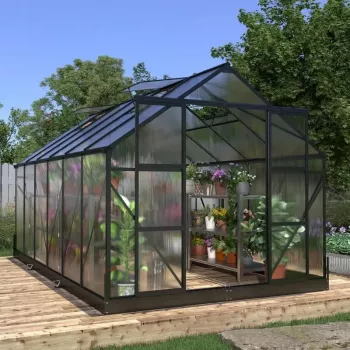
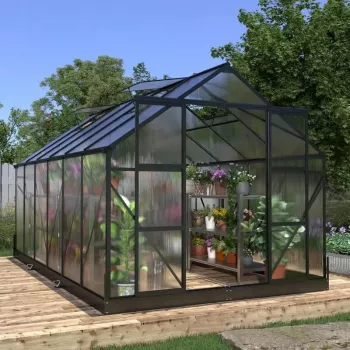
How much space should I leave around an 8×14 greenhouse for door clearance, ventilation, and maintenance access?
Answer
Plan for a clear, level perimeter so your 8×14 greenhouse is easy to enter, can vent properly, and can be maintained without squeezing between panels and landscaping. For most backyards, a practical target is 24–36 inches of open space on all sides, with a little extra where the doors and vents do the most work.
Door clearance: Leave at least 36 inches of unobstructed space in front of the door side so you can fully slide or swing the door without bumping planters, steps, or edging. If you’ll be carrying trays, rolling in a cart, or placing a threshold ramp, 48 inches in front of the entry is more comfortable.
Ventilation clearance: For vent windows and general airflow, keep 24–36 inches open along the long sides and near any vented panels. This helps prevent “dead air” pockets caused by fences, dense shrubs, or stacked supplies parked too close to the greenhouse. If the greenhouse sits near a solid fence or wall, aim for the higher end (closer to 36 inches) on that side to help heat and moisture escape.
Maintenance access: Expect to wash panels, tighten hardware, clear snow or leaves, and check the base. A 30–36 inch pathway fits most routine tasks and a step stool. If you anticipate frequent cleaning or repairs, or you have a narrow yard path that will double as access, consider 36–48 inches on the “work” side where you’ll spend the most time.
Bottom line: A simple, homeowner-friendly layout is 36 inches at the door end and 24–36 inches on the remaining sides, adjusted upward if you’ll use carts or have nearby fences, hedges, or downspouts.
For greenhouse-specific details like door style and vent window placement on an 8×14 polycarbonate model, see the main guide here: 8×14 Polycarbonate Greenhouse Guide (Sliding Doors + 4 Vent Windows).
FAQ
Do I need a foundation or base frame for an 8×14 greenhouse?
Yes, a level, anchored base helps prevent racking in wind, keeps doors aligned, and reduces gaps that can leak heat or invite pests. Common options include a treated lumber perimeter, a metal base frame, or a compacted gravel pad with anchors.













Leave a comment