8×14 Polycarbonate Greenhouse: Sliding Doors, 4 Vents
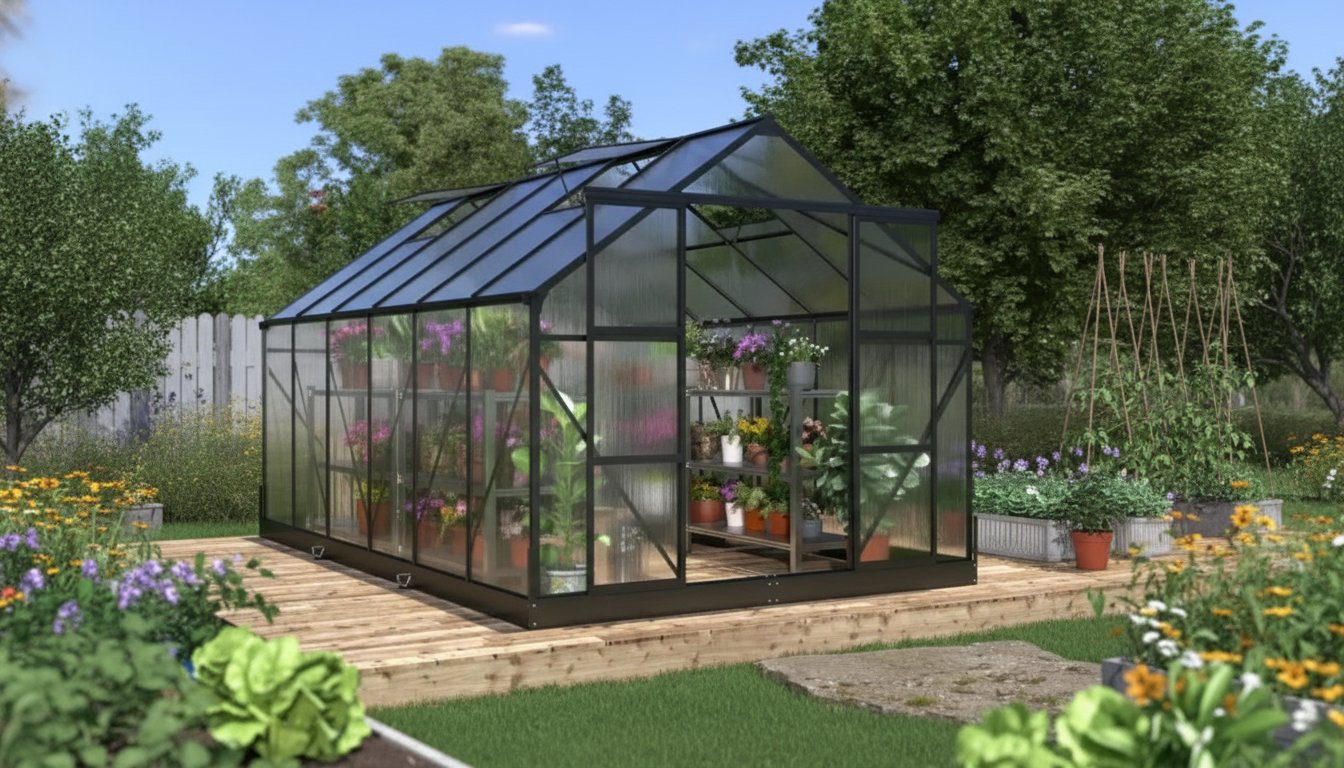
8x14x7.5 FT Polycarbonate Greenhouse with Sliding Doors and 4 Vent Windows
An 8×14 greenhouse hits a sweet spot for gardeners who want more than a small starter house but don’t need a full-scale structure. The footprint is comfortable for seed starting, overwintering tender plants, and growing a broader mix of crops without the “shuffle-and-squeeze” feeling that happens in tighter spaces. With polycarbonate panels that help insulate while diffusing sunlight, plus sliding doors and four vent windows for airflow control, this size is well-suited for steady growing through unpredictable weather swings.
What This Greenhouse Size Enables
- Room for dedicated zones: seed trays, a potting bench, tall crops, and shelving can coexist without blocking walkways.
- More stable temperatures than tiny structures: extra air volume helps slow down rapid spikes and dips.
- Easy access with sliding doors: especially helpful when carrying flats, soil bags, or long tools.
- A practical 7.5 ft height: supports trellising, hanging baskets, and comfortable movement while working.
Materials and Frame Considerations
- Polycarbonate light diffusion: panels typically soften harsh direct sun, which can reduce hot spots and leaf scorch during bright stretches.
- Impact resistance vs. glass: polycarbonate is generally easier to handle during installation and less likely to shatter if struck.
- Details matter: panel thickness, sealing, and edge closure influence drafts and moisture intrusion—small gaps can create big comfort issues in shoulder seasons.
- Match hardware to your conditions: confirm fasteners and anchoring methods make sense for local wind exposure and the ground you’re building on.
For climate basics and operational best practices, practical guidance from university extension programs can be useful—see the University of Georgia Extension for greenhouse management resources.
Ventilation and Temperature Control
- Four vent windows for cross-venting: vents near the roofline help release heat that collects at the top.
- Sliding doors for fast adjustments: crack the doors and open vents together to create a steady pull of fresh air through the structure.
- Helpful add-ons in hot climates: automatic vent openers, shade cloth, and a circulating fan can make a big difference when midday sun is intense.
- Cold-season routine: vent briefly on sunny days to drop humidity and reduce condensation, then close early to bank warmth for the night.
For additional greenhouse care and seasonal techniques, the Royal Horticultural Society offers clear, plant-focused guidance that translates well to home greenhouses.
Layout Ideas for an 8×14 Foot Footprint
- Two long side beds + center walkway: maximizes planting area while keeping access straightforward for pruning and harvest.
- One side shelving + one side bed: a practical split for seedlings, herbs, and potted plants on shelves, with in-ground or raised planting on the other side.
- Back wall for tall crops: tomatoes, cucumbers, and pole beans can use the height and overhead support points.
- Plan a tool corner: a small bin for hand tools plus a lidded container for fertilizers keeps the floor clear and reduces clutter.
| Zone | Suggested Placement | Purpose | Notes |
|---|---|---|---|
| Center walkway | Lengthwise middle | Access and airflow | Aim for comfortable passing width; keep clear of pots |
| Growing bed A | Left side | Primary crops | Use trellis clips or strings for vertical training |
| Shelving/bench | Right side | Seed starting and pots | Place near door for easy watering and monitoring |
| Tall crop zone | Back wall | Indeterminate tomatoes/cucumbers | Use overhead support; prune to manage humidity |
Condensation, Humidity, and Plant Health
- Expect condensation: enclosed spaces collect moisture; morning venting plus steady air movement helps dry surfaces.
- Water timing matters: watering early gives foliage time to dry before evening temperature drops.
- Reduce splash: mulch or ground cover helps lower fungal pressure and keeps soil from splattering onto leaves.
- Space plants for airflow: overcrowding raises humidity and can accelerate disease issues, especially with tomatoes and cucurbits.
Placement, Foundation, and Anchoring
- Chase winter sun: if cold-season growing is a priority, choose a location with maximum sun exposure; in hot regions, partial afternoon shade or shade cloth can prevent stress.
- Leveling affects everything: doors slide better and panels fit tighter on a level base—uneven ground can create binding and gaps.
- Common foundation options: a pressure-treated perimeter base, pavers, or a compacted gravel pad with anchors.
- Think like the wind: in gusty areas, prioritize anchoring and consider prevailing wind direction so it isn’t blasting straight into doors and vents.
If planting schedules depend on local winter lows, confirm your region using the USDA Plant Hardiness Zone Map and plan heating, insulation, and crop choices accordingly.
Seasonal Use: What to Grow and When
Care and Maintenance for Long Service Life
Product Snapshot
Model: 8x14x7.5 FT Polycarbonate Greenhouse with Sliding Doors and 4 Vent Windows
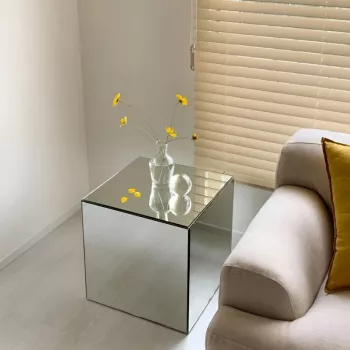
For a simple, wipe-clean surface that can function as a lightweight staging spot for small pots or tools near the entrance, consider adding a compact helper piece like the Minimalist Acrylic Side Table to your garden workflow.
FAQ
Do sliding doors help with greenhouse temperature control?
Yes—opening sliding doors increases air exchange quickly, and pairing door position with vent window openings creates cross-ventilation that moves hot air out. Partially opening the doors can fine-tune temperature without dumping all the warm air at once.
How many vent windows are enough for an 8×14 greenhouse?
Four vent windows can be effective for an 8×14 footprint when combined with opening the doors for intake and, if needed, a small circulating fan. How well it works depends on sun intensity, local heat, plant density, and whether vents can open automatically during peak temperatures.
What foundation works best under a polycarbonate greenhouse?
A level, well-draining base is the priority—common options include a treated wood perimeter base, pavers, or a compacted gravel pad with anchors. Choose the approach that makes anchoring straightforward and prevents puddling, since standing water can drive up humidity inside.













Leave a comment