4-Week Puppy Training Routine: Potty, Crate, Commands
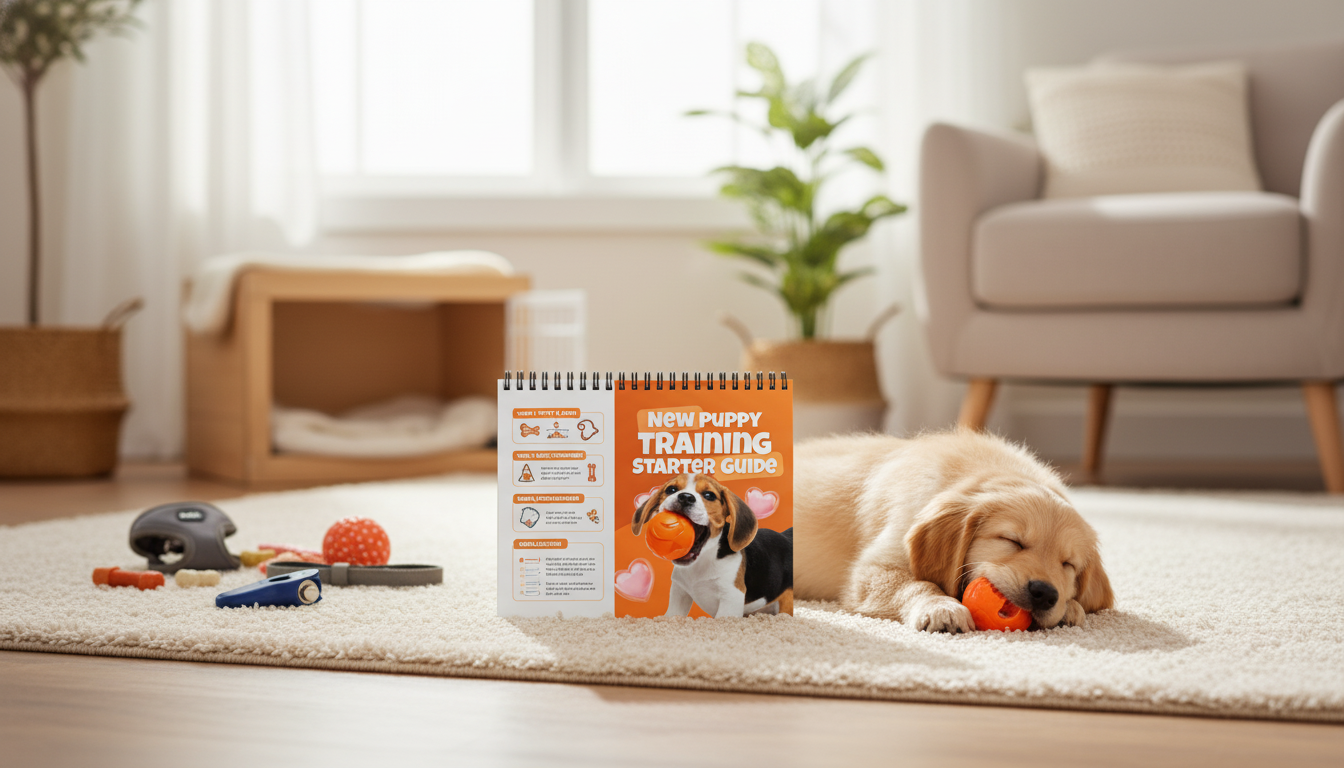
New Puppy Training Starter Guide: A 4-Week Routine for House-Training, Basics, and Social Confidence
A new puppy learns fastest with short, consistent sessions and a predictable day. This starter guide breaks training into simple daily habits: a clear potty plan, calm crate time, beginner commands, and safe socialization—organized into an easy 4-week routine that helps reduce accidents, nipping, and overwhelm.
What to Set Up Before Training Starts
Before cues and schedules, set your puppy up to succeed with smart management. The goal is fewer chances to rehearse accidents, chewing, or wild greetings while good habits take root.
- Choose a small “puppy zone” (pen or gated area) to prevent roaming and accidents while habits form.
- Pick high-value treats and use tiny pieces to keep sessions fast and focused.
- Decide on a potty spot and a consistent cue (same door, same area, same words each time).
- Prepare a crate or safe confinement space for naps and downtime; overtired puppies bite more and learn less.
- Agree on household rules early (furniture access, feeding times, greeting behavior) to avoid mixed signals.
If you want a single reference you can keep on the fridge, the New Puppy Training Starter Guide printable eBook organizes the routine into checklists and week-by-week focus areas.
The First 72 Hours: Routine Over Intensity
The first few days should feel almost boring—in a good way. Predictability lowers stress and helps your puppy learn your home’s rhythm.
- Prioritize sleep, potty predictability, and gentle bonding; keep training sessions under 2 minutes.
- Use a simple schedule: potty after waking, after eating/drinking, after play, and every 30–60 minutes at first.
- Reinforce calm behaviors (sitting for leash/clipping, settling on a mat) before focusing on flashy tricks.
- Introduce handling practice (ears, paws, mouth) with treats to support grooming and vet visits later.
- Limit new experiences to one or two per day to avoid flooding; quality matters more than quantity.
Think “tiny reps, big rest.” Puppies process learning during downtime, so a nap schedule is a training tool, not a break from training.
House-Training That Actually Sticks
House-training is mostly management plus timing. The more often your puppy finishes outside, the faster the habit becomes automatic.
- Start with management: leash the puppy to a person, use a pen, or use a crate when direct supervision isn’t possible.
- Reward within 1–2 seconds of finishing outside (treat + calm praise) to connect the outcome to the location.
- If an accident happens, clean with an enzymatic cleaner and tighten supervision; avoid punishment which can create hiding.
- Track patterns: many puppies need to poop shortly after meals and may pee again after active play.
- Night plan: last potty trip right before bed; if needed, set an alarm for a quick, boring potty break and return to bed.
For a deeper dive on preventing setbacks, the ASPCA house-training guide aligns well with a reward-based, routine-first approach.
Beginner Commands to Teach First
Begin with cues that improve safety and everyday handling. Keep the bar low: you’re building a reflex, not a perfect performance.
| Command | When to Use It | Beginner Goal |
|---|---|---|
| Name | Before any cue; when distracted | Looks at handler within 2 seconds |
| Sit | Greetings, leash clipping, meals | Sits once without repeated cues |
| Down | Settle moments, calm breaks | Holds for 3 seconds |
| Come | Indoor recalls, safety | Runs to handler from 6–10 feet |
| Leave it | Dropped items, chewing risks | Turns away and waits for reward |
For additional beginner mechanics and timing tips, the American Kennel Club’s puppy training basics is a helpful companion reference.
Biting, Chewing, and Jumping: What to Do Daily
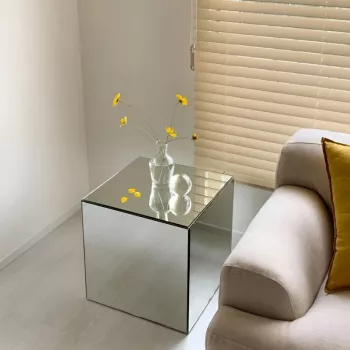
To keep your essentials within arm’s reach during training sessions, a lightweight surface can help—like the Minimalist Acrylic Side Table for treats, a leash, and toys near your puppy zone.
Socialization Without Overwhelming Your Puppy
The AVSAB position statement on puppy socialization supports early, thoughtful social exposure—especially when done with safety and veterinary guidance in mind.
A Simple 4-Week Routine to Follow
| Week | Training Focus | Home Habits | Social Goals |
|---|---|---|---|
| 1 | Name response; crate comfort | Potty every 30–60 min; reward outside | 2–4 calm exposures at a distance |
| 2 | Sit; down; leash basics | Chew routine; nap schedule | Short friendly visits; new sounds/surfaces |
| 3 | Leave it; short stays | Reduce accidents via tighter management | Controlled dog meetups; calm car rides |
| 4 | Recall foundations; distraction practice | Longer calm settling on mat | Busier locations from safe distance |
Printable Support for Busy Days
If you prefer a ready-made format, the New Puppy Training Starter Guide printable eBook is designed for quick reference—especially when multiple family members share training duties.
FAQ
How often should a new puppy go outside for potty breaks?
Start with potty breaks after waking, after eating or drinking, after play, and about every 30–60 minutes at first. Adjust based on age and your puppy’s pattern—if accidents happen, shorten the interval and increase supervision, especially during high-energy times and evenings.
When should a puppy start learning commands like sit and come?
Training can start immediately with 1–2 minute sessions, focusing on name response, sit, and happy indoor recalls. Use treats and repetition, and avoid punishment so your puppy stays confident and eager to engage.
How can socialization be done safely if vaccines aren’t finished?
Follow your veterinarian’s guidance and choose low-risk, controlled environments like clean homes or quiet outdoor areas. Use distance-based exposure (watching calmly from afar), consider carrying your puppy or using a clean blanket, and pair new sights and sounds with treats.














Leave a comment