48×30 Bathroom Mirror: Horizontal vs Vertical Hang
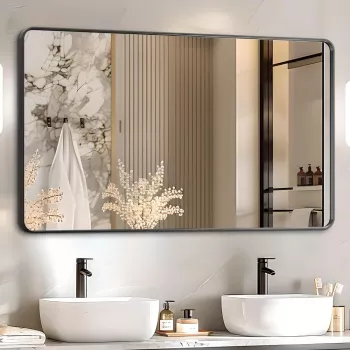
Should a 48×30 mirror be hung horizontally or vertically in a bathroom?
Answer
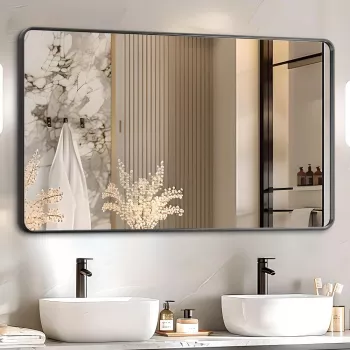
A 48×30 mirror can work either horizontally or vertically, but in most bathrooms it’s best hung horizontally. That orientation naturally matches the wide shape of a standard vanity and helps spread light across the sink area, making grooming tasks feel less shadowy. It also tends to look more balanced above a countertop that’s wider than it is deep.
Hang it vertically when the space is tall and narrow, when the vanity is compact, or when you’re trying to visually stretch the room upward. A vertical 48×30 mirror can be especially effective in a tight powder room, between wall sconces, or when a door swing or nearby cabinet limits horizontal space.
How to choose the right orientation for your layout
Go horizontal if your vanity is 48 inches wide (or wider) and you want the mirror to read as one clean, centered element. A horizontal mirror also pairs well with a single centered light bar or a pair of sconces placed at the sides.
Go vertical if you’re prioritizing head-to-chest visibility, have higher ceilings, or want to create a more “column” look between two vertical elements (like a linen cabinet on one side and a wall edge on the other). Vertical placement can also make a small bathroom feel taller.
Proportion tips (quick and practical)
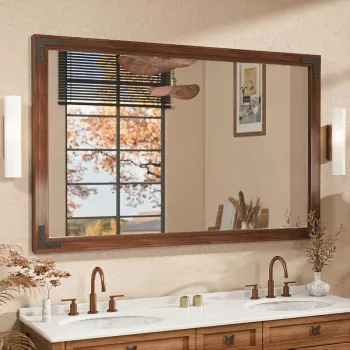
As a general rule, the mirror should feel proportional to the vanity: not wider than the vanity, and ideally leaving a little breathing room at each side. Also check that the mirror won’t collide with faucets, backsplash ledges, or light fixtures once installed.
For more sizing and placement specifics (including how to match mirror dimensions to common vanity widths), use this guide: bathroom mirror size and placement guide.
FAQ
How high should a bathroom mirror be hung above the vanity?
Position it so the center of the mirror lands around average eye level for your household, and leave enough clearance above the faucet so splashes are easy to wipe. If you have a vanity light, confirm there’s comfortable spacing between the top of the mirror and the fixture.













Leave a comment