Is a 48×30 Mirror Big Enough for a Double Vanity?

Is a 48×30 bathroom mirror considered large enough for a double vanity?
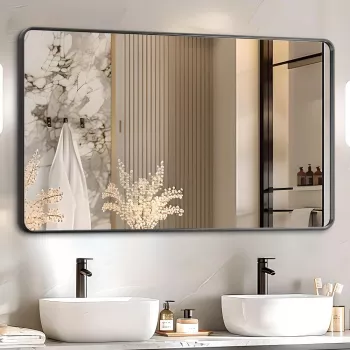
It can be, but it depends on the width of the vanity and whether you want one shared mirror or two separate mirrors. A 48×30 mirror is generally considered a “large” single mirror, and it often works well over smaller double vanities or setups where the sinks are closer together. However, for many standard double vanities (commonly 60–72 inches wide), a 48-inch-wide mirror may look undersized or leave too much empty wall space on both sides.
When a 48×30 mirror works well
A 48×30 mirror is usually a solid fit when the double vanity is on the narrower end (around 48–60 inches) and you prefer a clean, centered look. It also works well if you have wall sconces mounted outside the mirror area, since the extra side space helps balance the lighting and keeps fixtures from feeling cramped. The 30-inch height is generous for most adults, providing comfortable viewing for daily grooming without needing an unusually tall mirror.
When it can feel too small
If the vanity is 72 inches wide, a 48-inch mirror often reads as visually “lost” unless the surrounding design intentionally emphasizes negative space (for example, bold sconces, tall backsplash material, or prominent wall art). Functionally, a narrower mirror can also feel limiting when two people use the vanity at the same time, because each person gets less mirror width to work with.
Common sizing guideline for double vanities
A frequent rule of thumb is to choose a mirror (or pair of mirrors) that totals close to the vanity width, while still leaving a small margin at the ends. For a shared single mirror, many homeowners aim for something 2–4 inches narrower than the vanity overall. If that pushes you beyond 48 inches, consider a wider single mirror (like 54–60 inches) or two matching mirrors (often 24–30 inches each).
For more detail on selecting mirror dimensions and placement, see the full guide here: bathroom mirror size and placement guide.
FAQ
Should bathroom sconces be wider than the mirror?
Not necessarily. Sconces typically look best when their placement complements the mirror width—either centered beside the mirror edges or slightly outside—without making the mirror feel squeezed or off-center.













Leave a comment