85-Inch Sliding Door Double Dog Crate with Bowls & Drawer
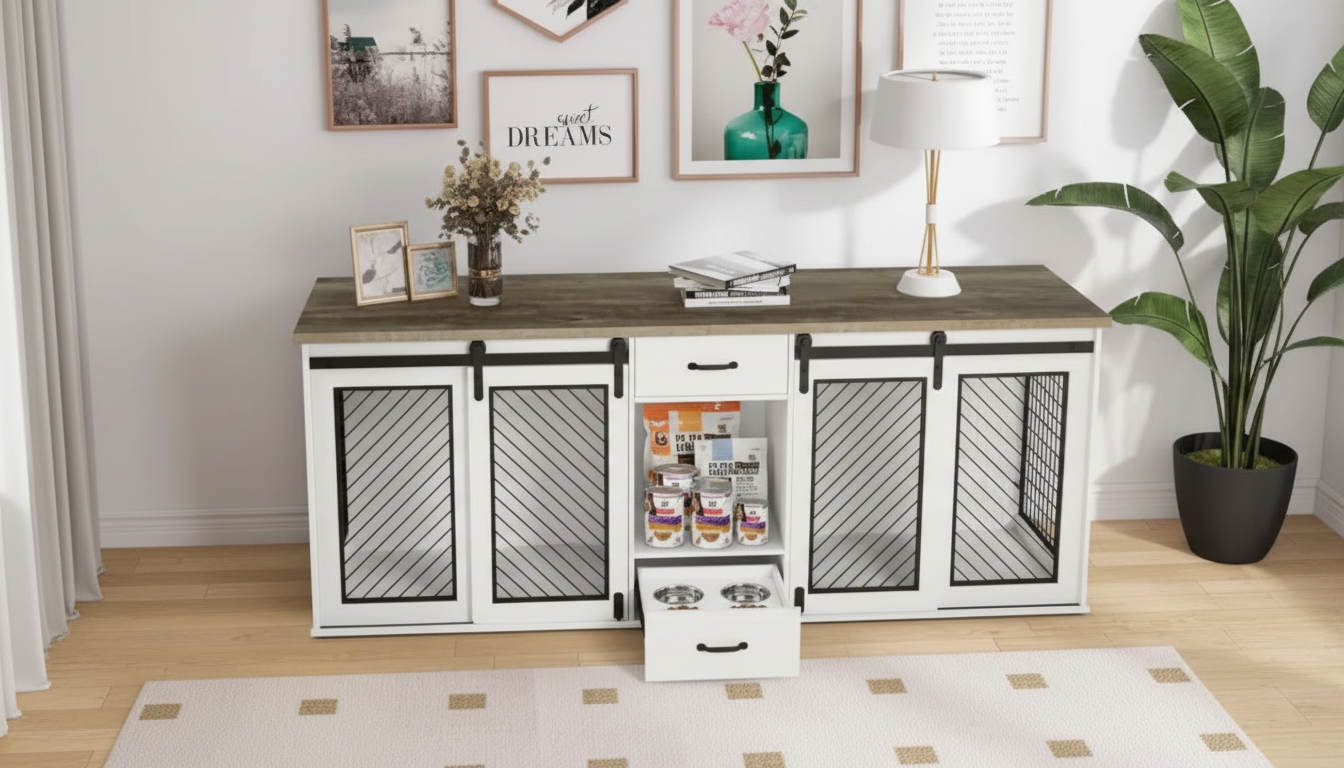
A double dog crate that also works as furniture can help keep two dogs comfortably separated while keeping the room tidy. This 85-inch setup combines sliding doors, built-in feeding bowls, and a storage drawer to support calmer routines, easier cleanup, and a more streamlined look in shared living spaces.
What This Style of Crate Furniture Solves at Home
Multi-dog households often need a practical way to create personal space without turning the living room into a kennel. An extra-long double crate furniture design provides two defined “rooms” while keeping the overall footprint clean and intentional.
- Creates two defined resting spaces to reduce resource guarding and bedtime pacing in multi-dog homes
- Keeps feeding more organized with built-in bowls, helping prevent dish wandering and spills
- Adds hidden storage for leashes, wipes, grooming tools, and food toppers in the drawer
- Offers a furniture-like footprint that can double as a console surface in living rooms or open-plan layouts
For many homes, the biggest win is routine: each dog has a consistent spot to settle, meals happen in the same place, and everyday supplies stay within reach instead of scattered across countertops.
Key Features to Look For in an 85-Inch Double Crate
Not all double crates function the same way day to day. The most helpful builds focus on access, separation, and durability—without feeling bulky.
- Sliding doors: useful where swing doors would bump into furniture, walls, or walkways
- Center divider: helps dogs settle separately while still being in the same area
- Ventilation and sightlines: spacing that supports airflow and reduces anxiety from feeling “boxed in”
- Stable top surface: allows safe use as furniture (avoid placing heavy items that could tip if bumped)
- Easy-access feeding: bowls positioned to reduce reaching into the crate and to simplify refills
Quick Checklist for Fit and Function
| Feature | Why it matters | What to check before buying |
|---|---|---|
| Interior space per dog | Comfort and safe turning/lying down | Measure dog length (nose to tail base) and height (floor to top of head/ears) and compare to interior dimensions |
| Sliding door clearance | Prevents blocked pathways | Ensure the door track can fully open without hitting nearby furniture |
| Divider strength | Reduces pushing/pawing between dogs | Look for a secure, well-fixed panel that doesn’t rattle |
| Bowl placement | Cleaner, more consistent feeding routine | Confirm bowl size suits each dog and that bowls are removable for washing |
| Drawer capacity | Keeps supplies in one place | Check drawer glide smoothness and interior depth for tall bottles or treat tubs |
Room Placement and Daily Use
Where the crate lives impacts how often your dogs actually relax in it. A good placement balances peace and connection—quiet enough for rest, but not isolated if your dogs prefer being near the household.
- Place in a low-traffic area where dogs can rest without constant interruptions, while still remaining near household activity if they prefer company
- Keep one side consistently assigned to each dog to reduce conflict and help with routine
- Use a washable crate mat on each side; keep bedding thickness low enough that doors slide freely
- Wipe door tracks regularly so hair and crumbs don’t interfere with smooth sliding
- For the bowl area, use splash-resistant mats underneath if the design allows, and wash bowls daily to reduce odor and buildup
Sliding doors are especially helpful in tighter layouts because you can open and close access without stepping backward or swinging a door into a hallway. If you’ve ever tried to manage leashes, bowls, and a curious dog while a hinged door fights for space, the difference is immediate.
Training and Comfort Tips for Two Dogs
A crate works best when it feels predictable and positive. For crate furniture used in shared spaces, consistency matters even more—two dogs will quickly notice differences in routine.
- Introduce the crate gradually: short, positive sessions with treats and calm praise
- Feed each dog in their own side to reinforce boundaries and reduce food tension
- Avoid using the crate for punishment; it should stay associated with calm downtime
- Provide enrichment: safe chews or lick mats (when appropriate) to encourage settling
- If one dog is anxious, cover part of that side with a breathable fabric to reduce visual stimulation while maintaining airflow
For guidance on building a safe, low-stress crate routine, reputable resources like the American Kennel Club (AKC) and the ASPCA outline practical steps for gradual training, appropriate duration, and comfort basics.
Care, Cleaning, and Long-Term Durability
Crate furniture sees a mix of pet wear and everyday household use. A simple maintenance routine helps keep sliding doors smooth and surfaces looking consistent.
Product Snapshot
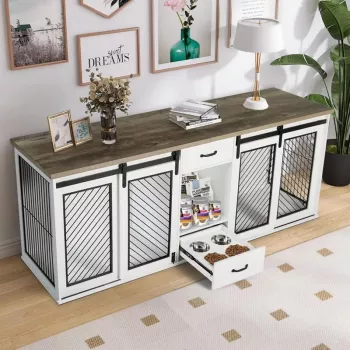
85″ Sliding Door Double Dog Crate Furniture with Bowls and Drawer is designed for homes that need two separate crate spaces without giving up a cohesive room setup. The sliding access supports tight walkways, the integrated bowls streamline feeding, and the drawer keeps essentials close.
Optional Add-Ons for a Coordinated Room Setup
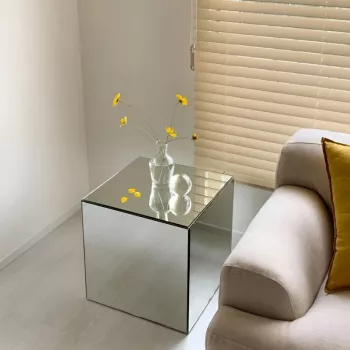
- Minimalist Acrylic Side Table for a lightweight, easy-to-wipe accent surface
- Modern Gold Stainless Steel Coffee Table to anchor a living room seating area
- Smart Toilet with Auto Open and Flush, Heated Seat, Bidet, and Intelligent Features for a high-function bathroom upgrade
FAQ
What is a tandem sliding door?
A tandem sliding door typically refers to two panels that move along tracks so one panel can slide behind the other. On crate furniture, this style of sliding mechanism saves space compared with swing doors and helps keep walkways clear.
How much does a double paned sliding glass door cost?
For residential use, double paned sliding glass doors often range from several hundred dollars to a few thousand, with costs driven by size, frame material, glass upgrades, and installation. This is different from sliding doors on crate furniture, which use smaller-scale hardware and materials.










Leave a comment