59-Inch Buffet Cabinet: Fit Check for Dining or Hallway
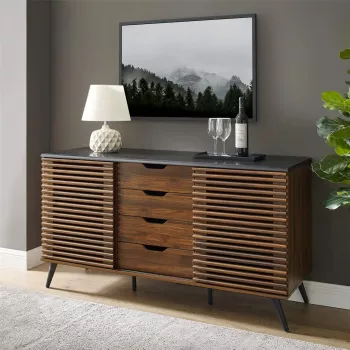
Will a 59-inch buffet storage cabinet fit in my dining room or hallway without blocking walkways?
A 59-inch buffet cabinet can fit comfortably in many dining rooms and hallways, but the real question is how much clear walking space you’ll have after it’s placed. Length matters less than depth and placement—especially in pass-through areas where people need to move around chairs, doorways, or corners.
How to check if it will block your walkway
1) Measure the cabinet footprint and add “real-life” clearance
Start by measuring the wall section where the cabinet will sit. Then consider the cabinet’s depth (front-to-back). In most homes, a comfortable hallway path is about 36 inches wide; 42–48 inches feels more open, especially in busy routes. If the cabinet depth leaves less than about 36 inches of clear space, it may feel tight or cause people to turn sideways when passing.
2) Watch for doors, drawers, and traffic pinch points
Even if the cabinet fits along the wall, you also need room to use it. Sliding doors are walkway-friendly because they don’t swing outward, but drawers still pull straight out. Make sure opened drawers won’t block a doorway, clash with a dining chair, or create a dead-end in a hallway. Also measure near corners, HVAC returns, and light switches—small obstacles can make a tight space feel even narrower.
3) Test placement with painter’s tape or cardboard
Before buying, outline the cabinet’s length and depth on the floor using painter’s tape (or place boxes to approximate the depth). Walk through the area as you normally would—carrying a laundry basket, pushing a stroller, or passing another person—to confirm the path feels natural.
Helpful sizing notes for a 59-inch buffet
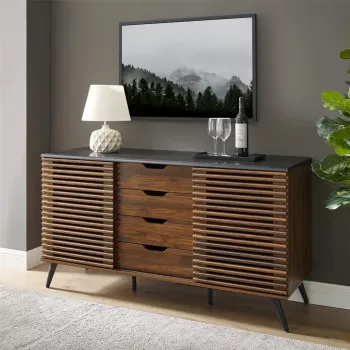
A 59-inch buffet often works best on a long dining-room wall, behind the dining table, or along a hallway wall that isn’t a primary choke point. If you’re considering a modern option with drawers and sliding doors, see dimensions, storage layout, and placement tips here: 59-inch modern buffet cabinet guide.
FAQ
How much space should I leave in front of a buffet cabinet for comfortable use?
Plan for about 36 inches of open space in front for easy walking, and more if drawers will be used frequently or the area is a main traffic route. If dining chairs or doors are nearby, aim closer to 42–48 inches to prevent congestion.










Leave a comment