Flat vs Ridged Side: Reversible Cast Iron Griddle Guide
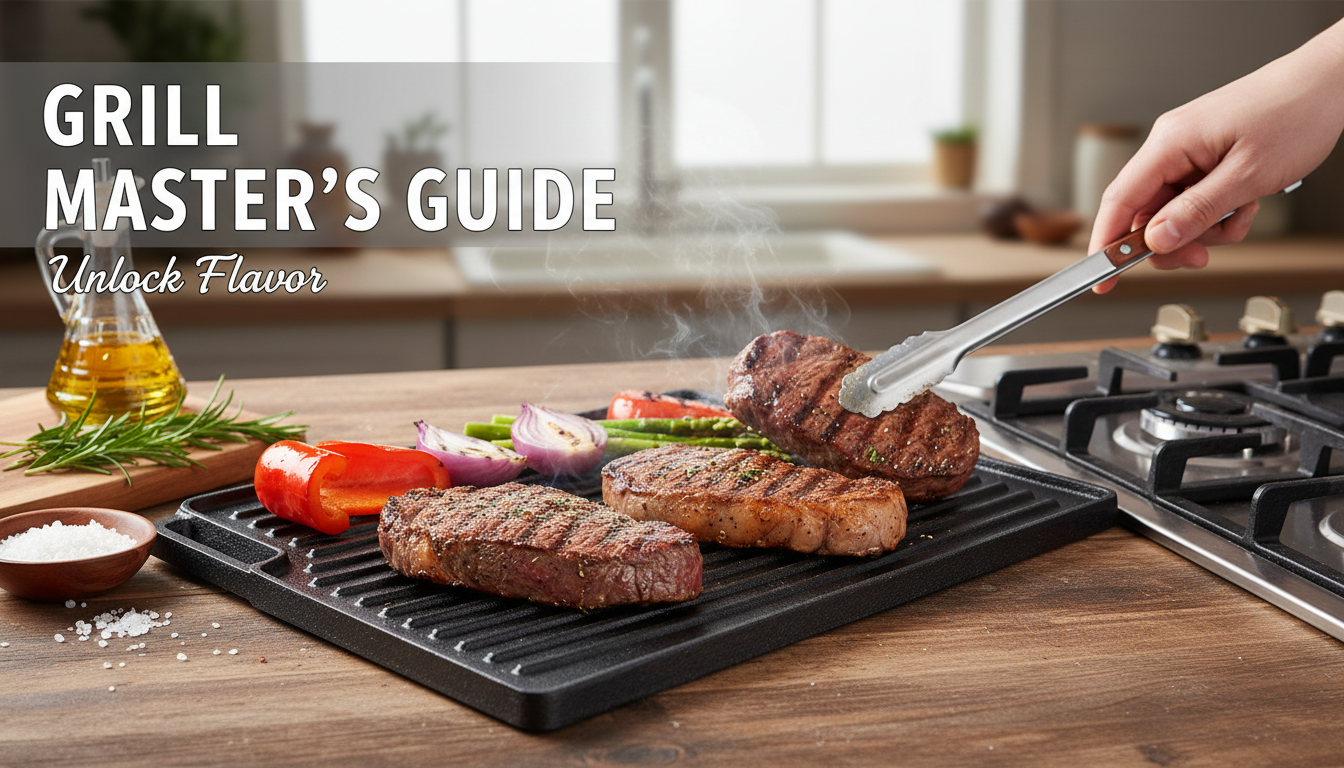
What’s the difference between the flat griddle side and the ridged grill side on a reversible cast iron griddle pan?
Answer
A reversible cast iron griddle pan gives you two distinct cooking surfaces designed for different results. The flat griddle side is smooth and maximizes full contact between food and iron, while the ridged grill side lifts food above the base so fat can drain away and grill marks can form.
Flat griddle side: This is the go-to surface for foods that benefit from even browning and edge-to-edge searing. Pancakes, eggs, bacon, grilled cheese, tortillas, smash burgers, and chopped veggies cook evenly because the entire surface touches the heat. It’s also easier to use with a spatula and simpler to scrape clean, since there are no grooves to chase.
Ridged grill side: The raised ridges create bands of intense contact that leave classic grill stripes while allowing rendered fat and juices to run into the channels. It’s ideal for steaks, chops, chicken cutlets, sausages, and vegetables like zucchini or asparagus when you want less surface oil and a “grilled” look. The tradeoff is slightly less overall crust compared with a flat surface, plus more detailed cleaning to remove residue from the grooves.
In practice, choose the flat side when you want maximum browning, delicate foods to release cleanly, or a wide, level cooking area. Flip to the ridged side when you want drainage, defined marks, and a bit less direct contact—especially helpful for higher-fat cuts.
For more details and tips on choosing the right side for different foods, visit the main article.
For Flat vs Ridged Side: Reversible Cast Iron Griddle Guide, the best answer depends on fit, material, care instructions, and how the product will be used day to day.
FAQ
Do you need to season both sides of a reversible cast iron griddle pan?
Yes. Season both sides (and edges) so either surface resists sticking and rust. If you mainly cook on one side, still keep the other lightly oiled and periodically refreshed so it stays protected.
















Leave a comment