How Robotic Hands Are Made: Design, Motors, Sensors
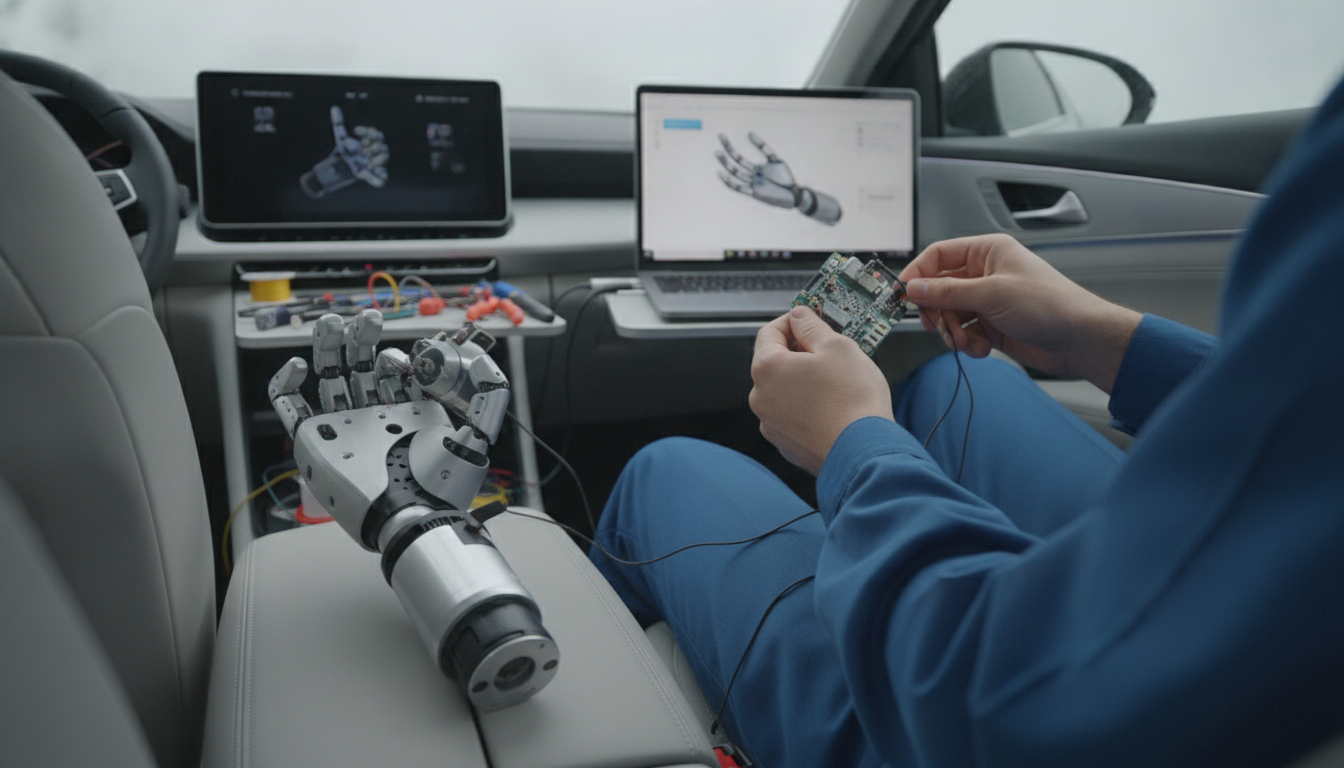
How are robotic hands made?
Robotic hands are made by combining mechanical parts, sensors, and electronics into a lightweight structure that can open, close, and grip with control. Most designs start with a clear goal—pinching small objects, grasping tools, or mimicking human finger motion—because the purpose determines the number of fingers, joint types, and the kind of “muscles” used to move them.
Step 1: Design the structure
Engineers model the palm and fingers in CAD software, choosing where each joint pivots and how far it should bend. Many prototypes use 3D-printed plastics for fast iteration, while higher-end hands may use aluminum, carbon fiber, or reinforced polymers for strength and reduced weight. The fingertip shape is also planned early, since rubber pads or textured surfaces can dramatically improve grip.
Step 2: Add actuators (the muscles)
Motion usually comes from small electric motors (servos or geared DC motors). Some hands use tendons—thin cables routed through the fingers—so the motors can sit in the palm or forearm while the cables pull the joints closed. Other builds place tiny actuators directly at each joint for more independent finger control, trading simplicity for added complexity and cost.
Step 3: Build in sensing and feedback
To avoid crushing objects or slipping, robotic hands often include sensors such as force-sensitive resistors, pressure sensors, or capacitive touch pads in the fingertips. Position feedback can come from encoders on motors or potentiometers at joints, allowing the controller to “know” how far each finger has moved.
Step 4: Wire the electronics and power
A microcontroller reads sensors and commands the motors based on programmed logic. Power design matters: motors need higher current than the control board, so builders typically separate motor power from logic power and regulate voltage to protect components. For a hands-on look at how simple power circuits work—especially for kid-friendly builds—see this guide to hand-crank generator STEM toy power circuits.
Step 5: Program and test
Software ties it together: grip patterns, speed limits, force thresholds, and safety cutoffs. Makers then test repeatedly with different objects, adjusting finger geometry, tendon routing, sensor placement, and control settings until the hand grips reliably.
FAQ
What are robotic hands used for?
They’re used in prosthetics, industrial automation, research labs, and education to demonstrate mechanics, control systems, and sensor feedback. Some are built for delicate tasks like picking up small parts, while others focus on strong gripping and durability.
















Leave a comment