Hand-Crank Generator STEM Toy: Power & Circuits for Kids
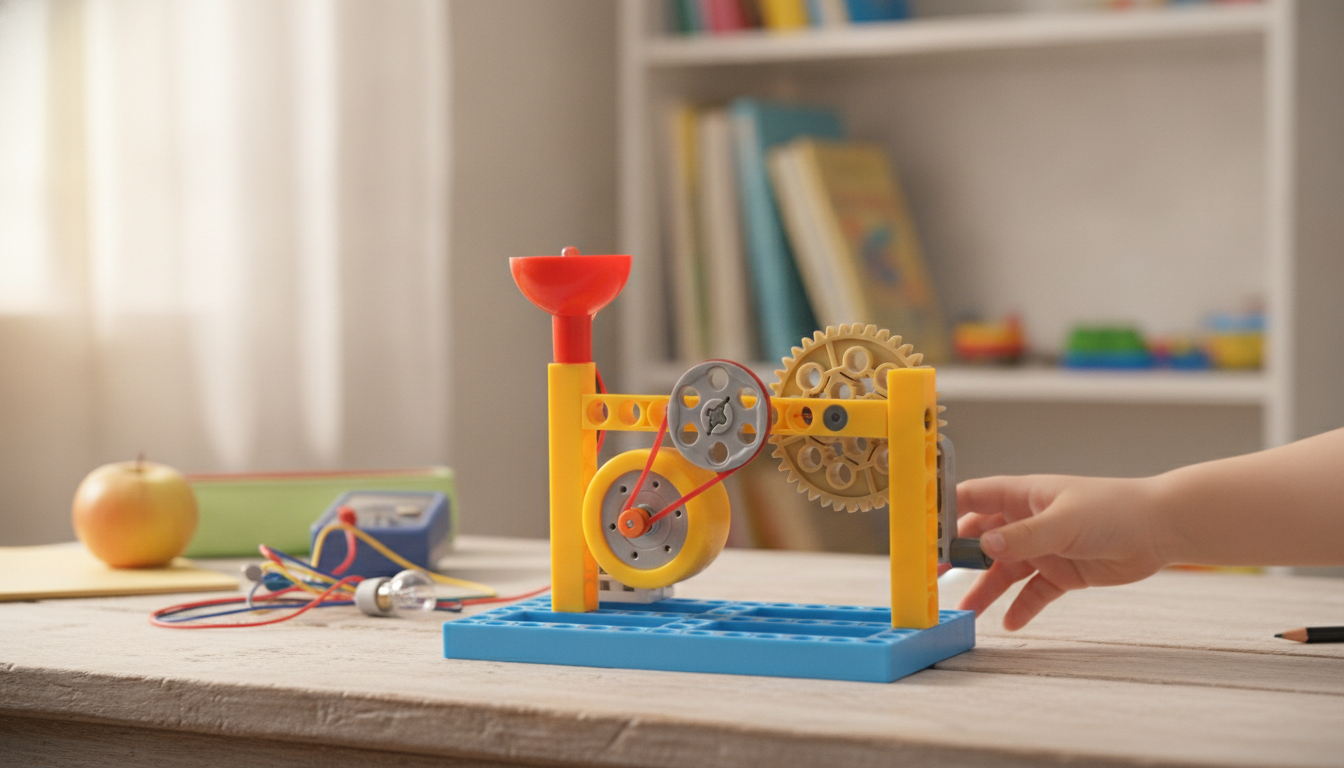
Interactive STEM Hand-Crank Generator Science Toy for Kids: Power, Motion, and Hands-On Discovery
A hand-crank generator science toy turns “kid energy” into real electrical energy—no batteries required. With a few twists of the handle, children can see immediate cause-and-effect: crank faster, get more power; add more devices, feel more resistance. It’s a playful way to build early STEM confidence while exploring circuits, motion, and problem-solving through hands-on discovery.
What It Is and What Kids Learn
A hand-crank generator converts mechanical energy (turning the crank) into electrical energy (power that can run small components). That simple idea opens the door to big STEM concepts—without needing advanced math or complicated setup.
- Energy transformation: muscles → motion → electricity → light/sound/movement.
- Basic circuitry: connections, current flow, and what happens when a circuit is incomplete.
- Resistance and load: why adding devices can make cranking feel harder.
- Engineering iteration: try, observe, adjust, and try again—like real designers and scientists.
It works well for guided learning at home, classroom centers, science fairs, and rainy-day tinkering when kids want something active that still feels like play.
How the Hand-Crank Generator Works (Kid-Friendly Explanation)
Inside the generator, cranking turns a shaft that helps create a changing magnetic field. That changing magnetic field can “push” electric charges through a circuit—this is what makes an electric current. Kids don’t need to memorize the physics to understand the big takeaway: turning motion can become electricity.
- Crank speed matters: Faster cranking generally increases output, so lights can look brighter or motors can spin faster.
- Heavier load = more effort: Powering more devices at once can make the handle harder to turn.
- Polarity can matter: Some components only work when connected the “right way.” Swapping connections can change direction on certain motors (when included).
- Short bursts vs. long runs: Quick bursts are great for demos; longer sessions are better for measurement, timing, and comparisons.
For approachable background reading, the U.S. Energy Information Administration’s kid-friendly overview explains electricity basics clearly: Energy Kids: Electricity Basics. For older kids ready to go deeper, Khan Academy has a helpful circuits unit: Khan Academy: Circuits.
Hands-On Activities to Try
These quick experiments encourage kids to predict outcomes, test ideas, and talk through what they notice—core habits of scientific thinking.
1) Speed Test
Crank slowly, then crank quickly. Record what changes: brightness, spin speed, or sound. Ask: “What stayed the same? What changed the most?”
2) Load Test
Power one component at a time, then try two together (when the kit supports it). Compare how hard it feels to crank and whether the output becomes less steady.
3) Energy Challenge (30 Seconds)
Try to keep output steady for 30 seconds. This is excellent for teamwork: one person cranks while another times, and a third records observations.
4) Design Iteration
Change only one variable at a time—crank speed, connection tightness, or component order—then document results. Over several trials, kids start thinking like engineers: identify a problem, test a fix, and improve the setup.
For more build-and-test inspiration, Exploratorium’s tinkering resources are packed with age-friendly project ideas and mindsets: Exploratorium: Tinkering Resources.
Simple Experiment Log (Printable-Style Table)
Using a structured log helps kids practice strong experiment habits: naming a variable, running trials, and recording outcomes. Encourage short notes about what was changed and what happened, not just “worked/didn’t work.”
| Trial | Crank Speed (slow/medium/fast) | Component Powered | What Happened | Notes |
|---|---|---|---|---|
| 1 | Slow | Single load | Observed change | Effort level, stability |
| 2 | Medium | Single load | Observed change | Any flicker or stall |
| 3 | Fast | Single load | Observed change | Peak output behavior |
| 4 | Medium | Two loads | Observed change | Compare to Trial 2 |
Age Range, Safety, and Supervision
- Best fit: Elementary to early middle school. Younger kids typically do best with adult setup help.
- Check connections: Secure connections before cranking for better consistency and less wear.
- Don’t force a stall: If a component stops or struggles, reduce the load and try again instead of cranking harder.
- Keep parts together: Store small components in one container and use a simple parts checklist to avoid missing pieces.
What’s Included and What to Have on Hand
The core experience centers on a hand-crank generator unit designed for repeated, hands-on use. To make activities smoother, keep a few everyday tools nearby:
- Notebook + pencil: for predictions, trial notes, and quick sketches.
- Masking tape: for labeling wires or marking “Trial 1 / Trial 2” setups.
- Stopwatch: for timed challenges and consistency tests.
- Optional (adult-guided): a beginner multimeter adds measurement and number sense.
Featured Picks for Hands-On STEM Play
- Interactive STEM Hand-Crank Generator Science Toy for Kids — a battery-free way to explore power, circuits, and motion through real-time feedback.
- Minimalist Acrylic Side Table — a clean, dedicated “experiment station” surface that helps keep parts visible and organized during builds and tests.
When This Toy Makes a Great Gift
FAQ
How to make a robotic hand for a science project?
Start with a cardboard (or foam board) palm and finger segments, then run string “tendons” through each finger so pulling the string bends the finger. For an upgrade, a hand-crank generator can power a small motor to pull a tendon spool, letting kids compare energy input (cranking effort) to motion output (grip strength) while iterating on finger joints and string routing.
What does a hand-crank generator teach kids?
It teaches energy conversion (motion to electricity), basic circuit behavior, and clear cause-and-effect: faster cranking usually means more output, while bigger loads increase resistance. It also builds experimentation skills like changing one variable at a time and recording observations across trials.















Leave a comment