Smart Air Purifier for 3576 sq ft Rooms: Buying Tips
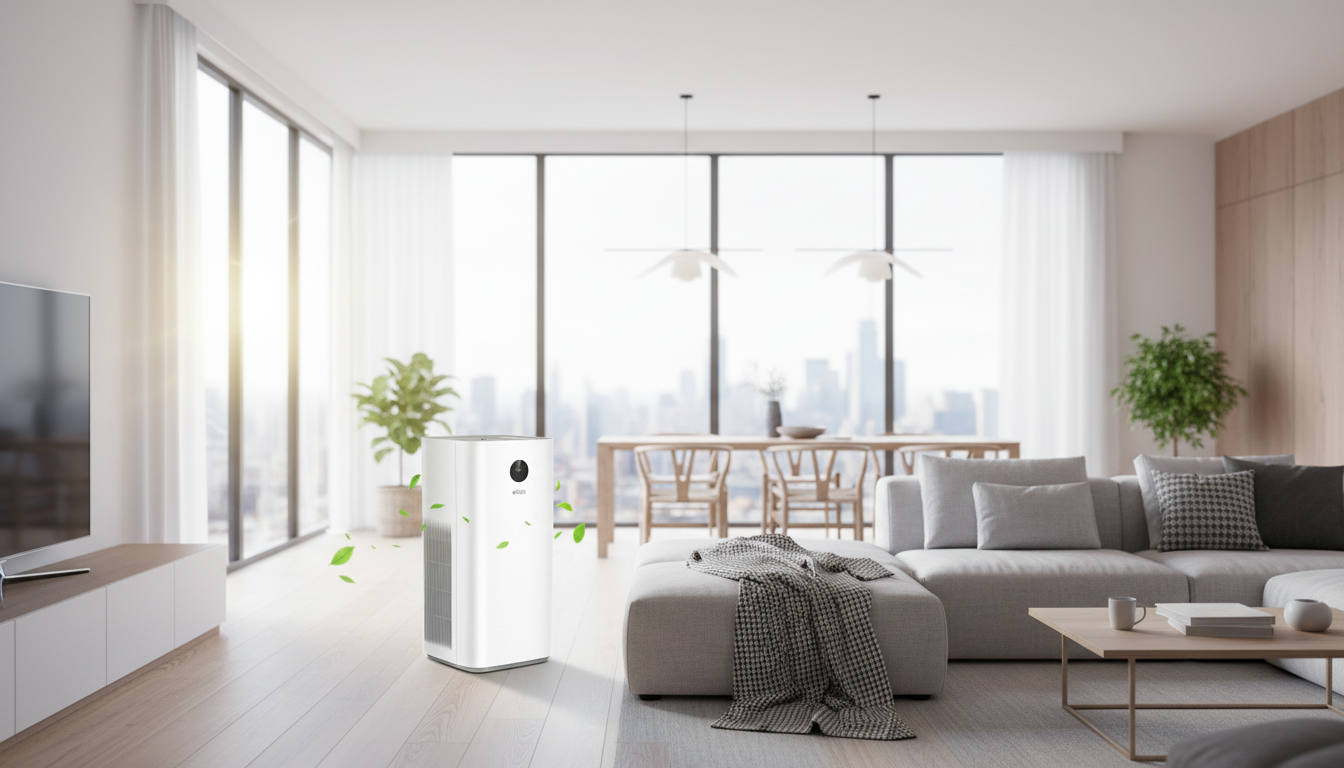
Smart Air Purifier for Large Rooms up to 3576 sq. ft: What to Know Before Buying
Large open spaces demand more than a compact purifier. For great-room layouts, finished basements, open-plan kitchens, or small offices, coverage, airflow, filtration, and app controls determine whether the air actually improves across the whole area. This guide breaks down the essentials and highlights a smart option designed for extra-large rooms.
When a Room Is “Large,” Coverage Needs Change
Square footage is only the starting point. Big rooms tend to behave like multiple connected rooms, especially in open-plan homes where air moves freely between zones. That means a purifier must move enough air to keep up with constant mixing—otherwise you’ll get “clean pockets” near the unit but stale air elsewhere.
Ceiling height changes the math, too. A 12-foot ceiling increases air volume by about 50% compared with an 8-foot ceiling at the same floor size, so a purifier that seems “right” by square footage may underperform in a tall great room or loft.
Pollutants also vary by space. Kitchens and open-plan cooking areas often need stronger odor and smoke control, living rooms and family rooms often deal with dust and pet dander, and newer builds or recently renovated spaces may require more attention to VOC-related odors. In many cases, one high-capacity unit placed well can outperform several small units scattered around—especially when the goal is consistent, whole-area circulation.
Key Specs That Determine Real-World Performance
Manufacturer coverage claims are helpful, but performance is easier to compare when you focus on a few measurable specs and ownership factors:
- CADR (Clean Air Delivery Rate): A practical indicator of how quickly a purifier can reduce airborne particles. Higher CADR generally clears large rooms faster. AHAM’s CADR overview is a useful reference point for understanding what the number represents.
- ACH (Air Changes per Hour): How many times the purifier can cycle the room’s air. Higher ACH is especially helpful during allergy spikes, wildfire smoke, or when you’re trying to knock down cooking particles quickly.
- Filter type and seal quality: HEPA-grade particle filtration helps capture pollen, dust, and dander; activated carbon helps reduce odors and some gases. A well-sealed filter system matters, because air that bypasses the filter doesn’t get cleaned.
- Noise vs. speed: High fan speeds clean faster but can be louder. For big rooms, it’s valuable to have both a quiet low mode you’ll actually run and a strong high mode for short “cleanup bursts.”
- Energy use: Many households run purifiers 8–24 hours a day. Efficient operation and sensible standby behavior can make a noticeable difference over time.
- Smart controls: Sensors, auto mode, schedules, and remote control can keep air quality stable without constant manual adjustments.
Quick sizing checklist for large spaces
| Factor | Why it matters | What to look for |
|---|---|---|
| Room volume | Bigger air volume requires more airflow | Account for ceiling height and open doorways |
| CADR / airflow | Determines cleaning speed | Higher values for faster clearing of smoke and allergens |
| Filter stack | Targets different pollutants | Particle filtration + carbon for odors/VOCs |
| Noise | Affects whether it runs consistently | Quiet low mode plus strong high mode |
| Smart features | Improves day-to-day usability | Auto mode, air-quality feedback, schedules |
Smart Features That Actually Help in Big Rooms
“Smart” matters most when it reduces the gap between what a purifier can do and what it actually does day to day.
- Air-quality sensing + auto mode: Automatically ramps up when pollutants spike from cooking, cleaning, pets, or outdoor smoke infiltration.
- Scheduling and routines: Keeps a steady baseline during high-occupancy hours, then downshifts at night for quieter operation.
- Remote control and alerts: Useful for multi-level homes, finished basements, studios, or offices where the unit isn’t always in sight.
- Filter-life tracking: Encourages on-time replacements—especially important in large spaces where restricted airflow is more noticeable.
- Integration reliability: App stability and Wi‑Fi reliability matter; it’s also worth confirming basic controls still function if the internet drops.
For broader indoor air quality guidance, the EPA’s guide to air cleaners in the home provides a grounded overview of what air cleaners can and can’t do.
Featured Option: Smart Air Purifier for Large Rooms up to 3576 sq. ft
If you’re trying to improve air quality across a whole floor or a large open-plan area, choosing a unit designed for extra-large coverage can simplify everything—fewer devices, less noise stacking, and more predictable results.
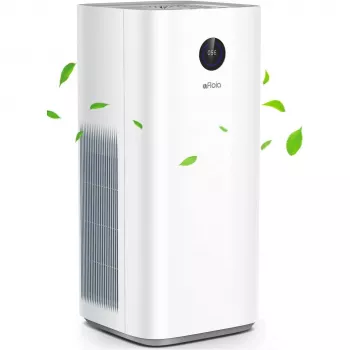
The Smart Air Purifier for Large Rooms up to 3576 sq. ft is built for very large spaces where air mixes across multiple zones rather than staying contained. Smart functionality supports hands-off operation through automated modes and remote control features (where supported), helping the purifier respond to real-life changes like meal prep, gatherings, or seasonal allergens.
Product snapshot
| Model | Max coverage | Price | Availability |
|---|---|---|---|
| Smart Air Purifier for Large Rooms up to 3576 sq. ft | Up to 3576 sq. ft | $405.01 | In stock |
Placement and Setup for Better Whole-Room Results
If you’re arranging furniture around a purifier, low-visual-weight pieces can help keep airflow open. A compact option like the Minimalist Acrylic Side Table can be easier to position without blocking intake/exhaust pathways.
Maintenance and Ownership Costs
For additional background on indoor air and health, PubMed Central’s research library includes peer-reviewed overviews and studies on indoor air quality topics.
FAQ
Which air purifier covers the most square footage?
Maximum coverage depends on a model’s airflow and the assumptions used in testing. For very large open spaces, choose a unit rated for extra-large rooms that can maintain strong airflow; the featured smart model is rated up to 3576 sq. ft.









Leave a comment