Enclosed Heavy Duty Dog Crate Furniture for XL Dogs
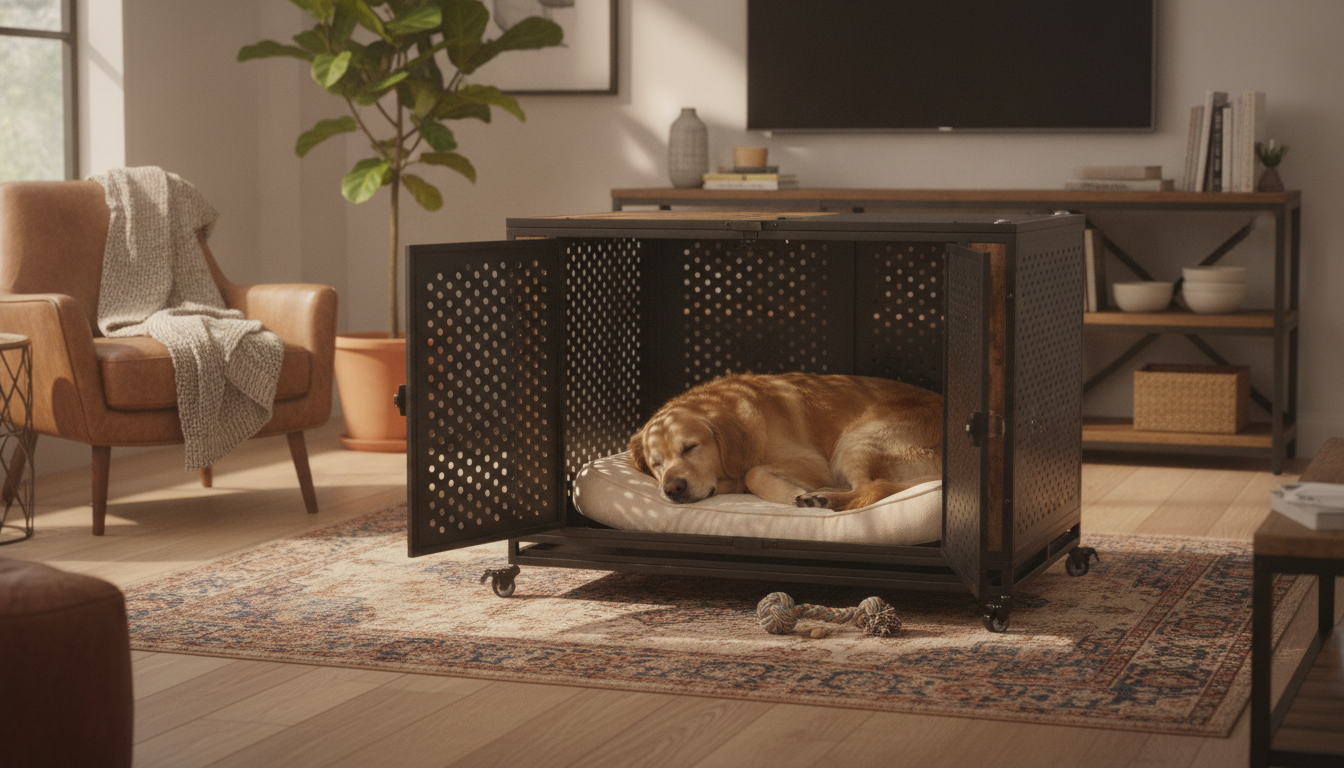
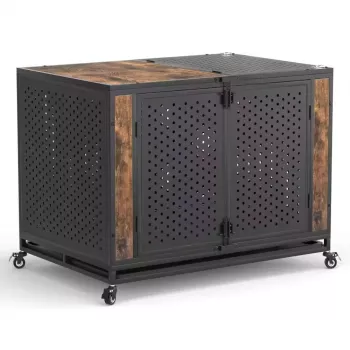
Heavy Duty Dog Crate Furniture for Extra Large Dogs with Enclosed Design
A crate that doubles as furniture solves two everyday needs at once: giving an extra large dog a secure, den-like place to relax while keeping your room looking intentional. An enclosed design helps reduce visual stimulation in busy homes, and heavy duty construction matters for powerful dogs, jumpers, and dogs that test doors and latches. Below is a practical guide to what to look for, how to size it correctly, and how to use it comfortably and safely day to day.
What makes a crate “furniture” and why enclosed designs feel different
Furniture-style crates are built to blend into your home rather than announce “kennel.” They typically use finished exterior panels, cleaner hardware, and a flat top that functions like an end table or console. For households that keep the crate in a main living area, this can make a big difference in how the space feels.
Enclosed designs also change the dog’s experience inside. Solid side/top panels reduce drafts and sightlines compared with wire-only crates, which can help some dogs settle faster when there’s movement, guests, or other pets nearby. The interior tends to feel more “den-like,” especially when paired with predictable routines and positive reinforcement (AKC crate training guidance can be helpful: https://www.akc.org/expert-advice/training/crate-training-your-dog/).
Who benefits most from a heavy duty enclosed crate
- Extra large breeds that need more interior height/length and a sturdier frame to prevent flexing.
- Strong dogs that paw, lean, or push on doors during excitement spikes (doorbell, visitors, feeding time).
- Homes that want a crate in a shared space without the look of traditional kennel equipment.
- Dogs that settle better with fewer distractions, especially in open-plan layouts and multi-pet households.
Sizing for extra large dogs: comfort, turning radius, and door clearance
Correct sizing is the difference between a crate that feels like a refuge and one a dog avoids. Measure your dog while standing:
- Length: nose to the base of the tail (not the tip).
- Height: floor to the top of the head or ears (whichever is higher in a natural stance).
Choose interior dimensions that allow your dog to stand naturally, turn around without squeezing, and lie down fully stretched. Pay attention to more than the “overall” dimensions—thicker panels and furniture frames can reduce usable interior space.
Door opening size matters just as much as the interior. Broad chests, tall shoulders, and thick necks need generous clearance so entry and exit stay smooth and confident. Also consider the crate’s placement: wall location, baseboards, nearby furniture, and the door swing path so the entry isn’t blocked by traffic patterns.
Finally, plan for bedding thickness. A plush mat can reduce usable height and can crowd the door area if the entry lip is tight, especially for giant breeds.
Durability and safety details that matter for powerful dogs
- Door and latch security: look for latches that resist pawing and nose-pushing but still operate smoothly for daily use.
- Ventilation: enclosed panels should provide airflow through slats, vents, or spaced bars so the interior doesn’t feel stuffy.
- Rounded edges and safe interior finishes: helps reduce snag risks for collars and prevents scrapes to noses and paws.
- Stable base and anti-rack build: the unit shouldn’t wobble when a large dog shifts weight or stands up quickly.
- Non-toxic finishes and easy-clean surfaces: important for drool, shedding, and occasional accidents (general care resources: https://www.aspca.org/pet-care/dog-care).
Feature checklist for an enclosed heavy duty crate that functions as furniture
A furniture crate should work as both a secure enclosure and a practical surface in your room. Use this quick guide to compare options:
Quick guide to evaluating enclosed heavy duty dog crate furniture
| Feature | Why it matters | What to look for |
|---|---|---|
| Interior dimensions | Determines comfort and willingness to use the crate | Room to stand, turn, and lie stretched; verify interior, not just overall size |
| Door/latch design | Prevents escapes and reduces frustration behaviors | Sturdy latch, minimal flex, smooth open/close, no sharp edges |
| Ventilation | Supports temperature comfort and reduces humidity | Slats/vents or bar sections on multiple sides for cross airflow |
| Stability | Keeps the crate from shifting when a large dog moves | Solid base, level feet, strong joints, no wobble |
| Surface finish | Impacts cleanup and odor control | Sealed surfaces that wipe clean; scratch resistance; pet-safe materials |
| Top usability | Makes it truly functional as furniture | Flat, stable top; safe decor placement away from edge |
Placement in the home: making it feel secure without isolation
Helping anxious or excitable dogs settle in an enclosed crate
Care and upkeep for long-term use
Recommended options in stock
- Heavy Duty Dog Crate Furniture for Extra Large Dogs with Enclosed Design — designed to offer a sturdier, more enclosed den-like setup while functioning as a furniture piece in shared living spaces. Before purchase, confirm interior dimensions match your dog’s measurements and plan placement for door swing and airflow.
- Minimalist Acrylic Side Table — a clean, modern option for separating decor from the crate top if you prefer to keep the crate surface clear for safety.
- Modern Gold Stainless Steel Coffee Table — a statement piece that can anchor the room so the crate reads as part of a coordinated furniture layout rather than a standalone kennel.
FAQ
Are high anxiety crates good for dogs?
They can help some dogs settle by reducing visual triggers and creating a more den-like feel, but they’re not a stand-alone fix. Success depends on correct sizing, good airflow, safe materials, and a gradual, positive training plan. For panic-level separation anxiety, professional guidance is recommended.









Leave a comment