Easy Tendon-Driven Robotic Hand for Science Projects
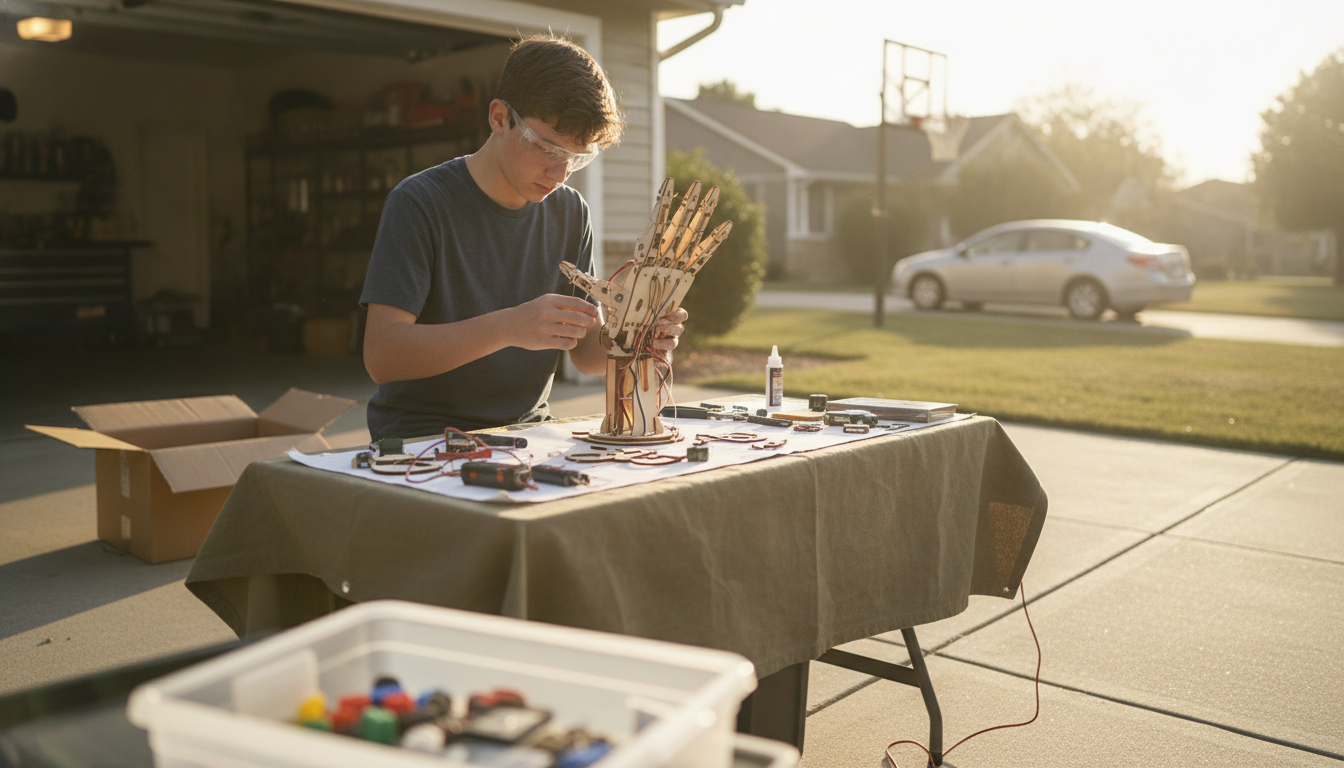
How to make a robotic hand for a science project?
A great science-project robotic hand doesn’t need expensive motors or complex coding. A simple “tendon-driven” build uses a lightweight hand frame, strings for tendons, and finger joints that bend when you pull. It demonstrates core robotics ideas—mechanical advantage, linkages, and control—while staying safe and easy to present.
Materials you can gather quickly
Cardboard or foam board (hand frame), drinking straws (guides), string or fishing line (tendons), popsicle sticks or craft foam (fingers), brads or small bolts (joints), tape/hot glue, scissors, and a marker. Optional upgrades: rubber bands (return force), a glove (wearable base), and a small hand-crank generator if you want to add simple powered motion later.
Build the hand frame and fingers
Trace your hand on cardboard and cut out the palm shape. For each finger, cut 2–3 segments (like knuckles) from craft foam or thin cardboard. Connect segments with brads so they hinge. Attach each finished finger to the palm with tape or a brad joint. Aim for smooth bending without wobbling.
Add “tendons” and straw guides
Tape short straw pieces along the top of each finger segment and across the palm toward the wrist. Thread a string through the straws for each finger. Tie the string to the fingertip end; leave extra length at the wrist so you can pull it. When you pull a tendon, the finger should curl. Add a rubber band on the back of the finger (or a second string) to help it straighten when you release.
Make it presentation-ready
Label parts (palm, joints, tendons, guides) and demonstrate one-finger control first, then all fingers together. For an extra STEM angle, connect your build to basic power concepts by exploring a hand-crank generator and simple circuits: https://lirete.com/guide-hand-crank-generator-stem-toy-power-circuits-for-kids/.
FAQ
How are robotic hands made?
Robotic hands are typically built with a rigid frame, jointed fingers, and an actuation method—like motors, cables (tendons), or pneumatic systems—plus sensors and a controller to coordinate movement. Many educational versions use simple tendon strings and hinges to mimic how human fingers pull and flex.















Leave a comment