Resin vs Acrylic Diamond Painting: Feel, Sparkle, Fit
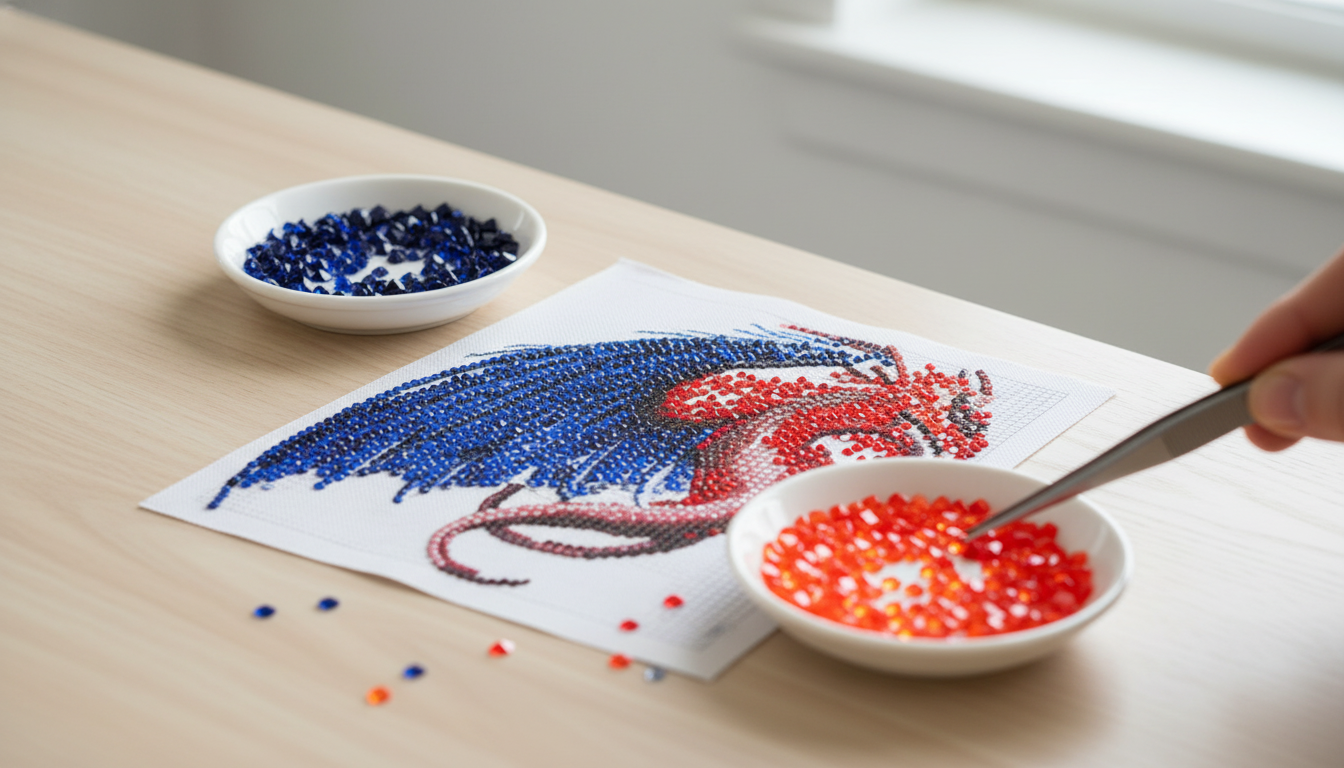
What’s the difference between resin and acrylic diamond painting?
In diamond painting, “resin” and “acrylic” describe two common materials used for the little faceted drills that create the finished shimmer. Both can look beautiful, but they feel a bit different to place and can wear differently over time.
Material feel and weight
Resin drills are typically a touch heavier and often feel more “solid” in the tray and on the canvas. Acrylic drills are lightweight plastic; they can be perfectly usable, but they may feel slightly less substantial during placement, especially when working quickly with a multiplacer tool.
Sparkle and facet crispness
Resin drills are known for crisp facets and a glassier, high-sparkle look under light. Acrylic drills can still shine, but they may appear a bit softer in clarity depending on the cut quality and the specific color—some batches look nearly identical to resin, while others show a more plastic-like sheen.
Consistency and “fit” on the canvas
Many crafters find resin drills tend to be more uniform in size, which helps rows line up neatly and reduces gaps or popping—especially on square-drill kits where precision matters. Acrylic drills can be slightly more variable, which might require a little extra nudging to keep the grid tidy.
Durability and long-term finish
Resin is generally more resistant to tiny surface scuffs and can hold its shine well over time. Acrylic is still durable for normal display, but it can be more prone to minor scratching if drills rub together a lot in storage or during heavy handling.
Which should you choose?
If the priority is maximum sparkle and consistent placement, resin drills are often the upgrade. If value and availability matter most, acrylic can still deliver a satisfying, colorful result—especially when paired with good lighting and careful sealing or framing.
For a related look at glossy, light-catching materials used in home décor, see this acrylic diamond mirror guide.
FAQ
Does Diamond Art Club use resin or acrylic?
Diamond Art Club is widely known for using resin drills in many of its kits, which helps deliver consistent sizing and strong sparkle. Specific kits can vary, so checking the product listing or kit details is the safest way to confirm.















Leave a comment