Reversible Cast Iron Griddle: What It Means & How to Use It
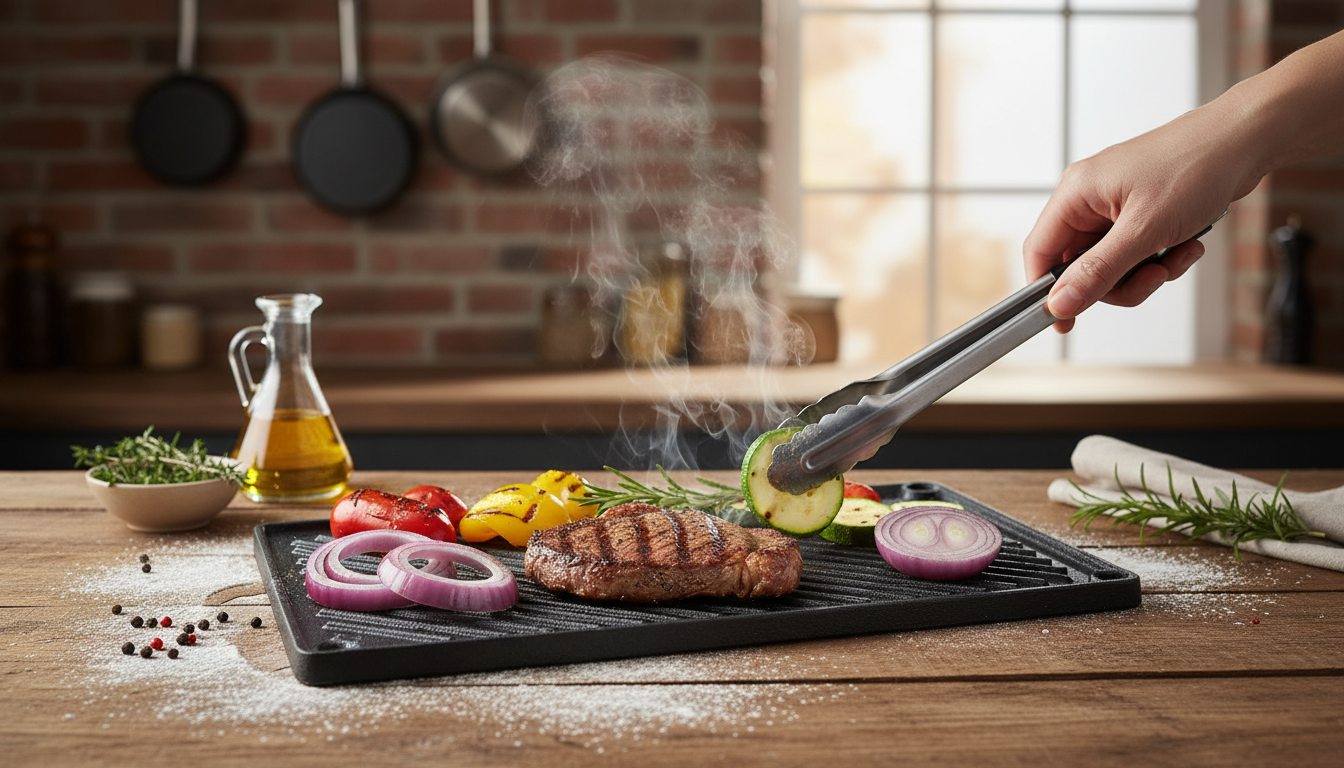
What does “reversible” mean on a cast iron griddle pan, and how do you use each side?
On a cast iron griddle pan, “reversible” means the pan is designed with two usable cooking surfaces—one on each side—so you can flip it over to switch functions. Most reversible cast iron griddles have a smooth, flat griddle side for even browning and a ridged grill side that lifts food above the surface to create sear marks and let excess fat drain away.
How do you use the smooth griddle side?
The smooth side is the go-to for foods that benefit from maximum contact with hot iron. Use it for pancakes, eggs, tortillas, grilled sandwiches, burgers, chopped veggies, and seafood. Preheat the griddle gradually, then add a thin layer of oil or butter if needed. Because cast iron holds heat well, moderate heat is often enough once the pan is hot, helping prevent scorching and sticking.
For best results, let the surface fully preheat before adding food, and avoid moving items too soon—many foods release naturally once they’ve browned.
How do you use the ridged grill side?
The ridged side is ideal when you want grill-style char lines and slightly less surface contact. It works well for steaks, chicken, sausages, kebabs, peppers, asparagus, and other foods that you’d normally cook on a grill. Preheat the grill side, lightly oil the food (rather than flooding the pan), and place items across the ridges to encourage attractive marks.
Because the ridges create channels for drippings, this side can reduce greasiness—but it may produce more smoke. Good ventilation helps, especially on indoor stovetops.
Quick tips for flipping and placement
Many reversible griddles are sized to span two burners. Center it so each burner heats an even portion, and preheat slowly to reduce hot spots. When flipping, use oven mitts and a clear landing area—cast iron is heavy and stays hot for a long time. If your model has a grease trough, orient it toward the front for easier access.
For more details, comparisons, and care tips, visit the full guide here: https://lirete.com/what-does-reversible-mean-on-a-cast-iron-griddle-pan-and-how-do-you-use-each-side/.
FAQ
Do you need to season a reversible cast iron griddle pan?
Yes. Seasoning helps prevent rust and creates a more nonstick cooking surface. Keep both sides lightly oiled and re-season if food starts sticking or the surface looks dull or dry.













Leave a comment