Wooden Animal & Vegetable Puzzle for Toddlers
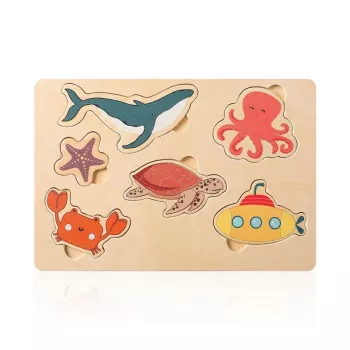
Baby Wooden Animal & Vegetable Puzzle Toy – Early Learning Jigsaw for Kids
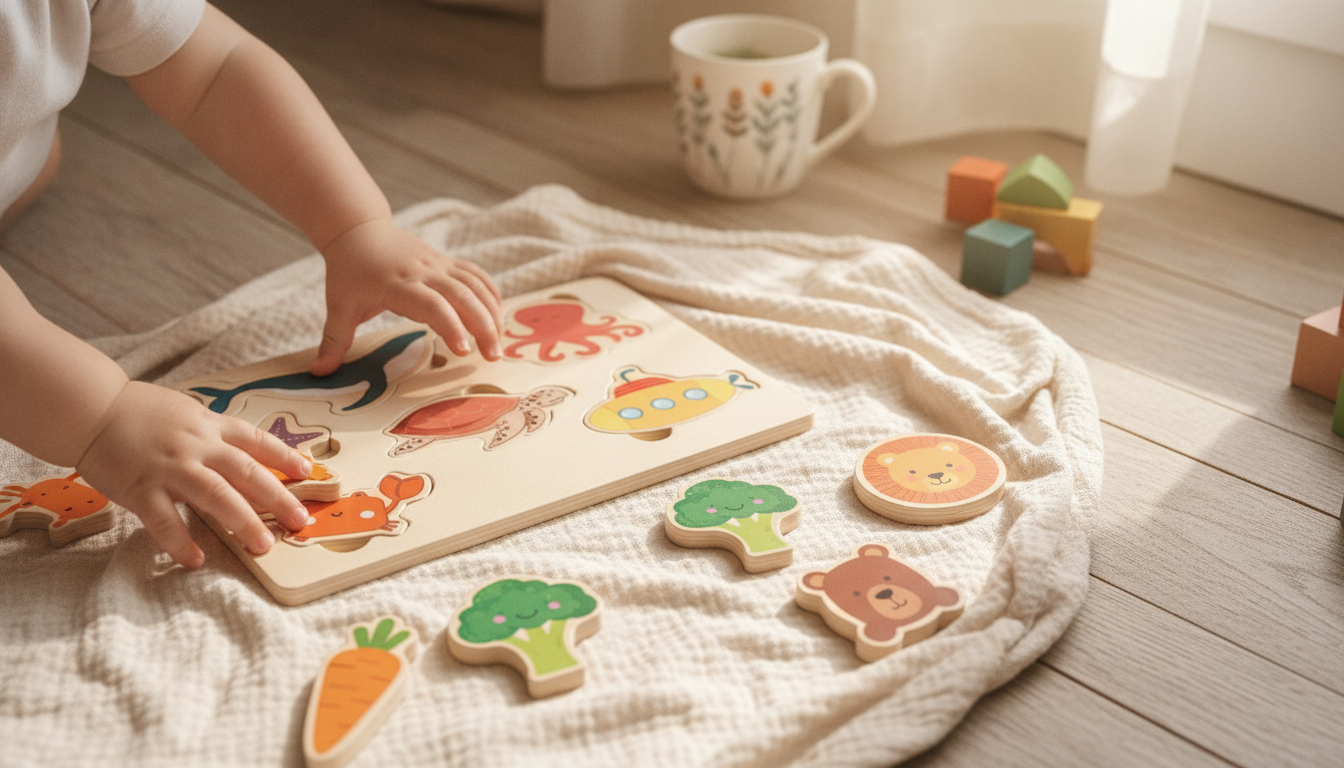
A wooden animal-and-vegetable puzzle can turn everyday playtime into hands-on learning. With bright, familiar shapes and a simple match-and-fit design, this type of jigsaw supports fine-motor practice, early vocabulary, and problem-solving in a screen-free way—ideal for short, repeated play sessions at home or on the go. Play-based learning is widely recognized as an important part of healthy development, and it doesn’t require complicated materials—just engaging, age-appropriate tools and a little time to explore. Helpful context on the value of play is available from the American Academy of Pediatrics. For more guidance, see [PDF] New York State Early Learning Guidelines.
What This Puzzle Toy Is
A baby wooden animal and vegetable puzzle is a kid-friendly jigsaw-style board with chunky pieces that match clearly defined cutouts. Children pick up pieces, turn them in their hands, and align edges until each piece “clicks” into its spot—an easy-to-understand challenge that encourages repetition without feeling like a lesson. For further reading, see [PDF] Washington State Early Learning and Development Guidelines ….
- A wooden puzzle featuring recognizable animal and vegetable shapes for matching and placement.
- Designed for early learning through tactile play: picking up pieces, aligning edges, and fitting shapes into their spots.
- Works well as an independent activity or a guided game with an adult using naming, counting, and simple questions.
Quick Product Snapshot
| Detail | What to look for / why it matters |
|---|---|
| Material | Wooden pieces are durable and provide a solid grip for small hands. |
| Theme | Animals and vegetables support everyday word learning and category sorting. |
| Skill focus | Fine-motor control, hand-eye coordination, early vocabulary, and problem-solving. |
| Best use | Short, repeatable play sessions; easy to integrate into daily routines. |
Key Skills Supported During Play
This kind of puzzle looks simple, but it naturally invites your child to practice several foundational skills at once. Because the “right answer” is built into the board, kids get immediate feedback without needing screens, batteries, or lengthy instructions.
- Fine-motor development: Grasping, turning, and placing pieces encourages finger strength and control.
- Hand-eye coordination: Children practice aligning shapes while visually tracking edges and openings.
- Early language: Naming animals/vegetables, describing colors, and learning simple categories (farm animals vs. veggies).
- Cognitive skills: Trial-and-error fitting builds persistence, planning, and spatial awareness.
- Early math readiness: Counting pieces, comparing sizes, and using positional words (in, on, under, next to).
As children approach toddlerhood, many are rapidly expanding communication, attention, and problem-solving abilities. For a quick overview of age-related developmental milestones, the CDC’s milestone guide is a useful reference.
How to Play: Simple Games That Grow With Your Child
One of the best features of an animal-and-vegetable wooden puzzle is how easily it adapts as your child’s skills change. Start with easy wins, then add small challenges—without turning playtime into pressure.
Name-and-place
Say the piece name together (“carrot,” “cow,” “tomato”), then place it. Repeating the same words during a calm routine helps the vocabulary stick while your child practices controlled movements.
Find the match
Hold up two pieces and ask which one belongs in a specific spot. If your child guesses incorrectly, keep it light: “Let’s try the other one.” This reinforces flexible thinking and reduces frustration.
Category sorting
Separate animals from vegetables, then talk about where they come from (farm, garden, market). This builds early “sorting” logic—a building block for later learning.
Color hunt
Pick a color and locate all pieces with that color. This supports attention and visual discrimination, especially when you gradually increase the number of pieces shown at once.
Story play
Create a tiny story (an animal eats a vegetable, visits a garden, or goes to a market). Storytelling encourages sequencing (first/next/last) and invites your child to use new words in context.
Safety and Material Considerations
Since puzzles are handled frequently—and often explored with the mouth by younger children—materials and finish quality matter as much as the design.
- Choose sturdy, splinter-free wooden pieces with smooth edges for comfortable handling.
- Look for child-safe finishes and paints; avoid strong chemical odors and flaky coatings.
- Use age-appropriate puzzles: simpler fits and larger pieces typically suit younger children and beginners.
- Supervise as needed, especially with younger kids who may mouth toys during exploration.
- Store pieces in a consistent place to reduce loss and keep play sessions frustration-free.
When This Puzzle Is a Great Fit
A wooden animal-and-vegetable puzzle is an easy “yes” for families who want a practical toy that gets used often. It’s compact, quiet, and simple enough for repeated daily practice.
- Giftable learning toy: A solid pick for birthdays, holidays, and everyday milestones when a practical toy is preferred.
- Screen-free quiet time: Useful for pre-dinner play, travel breaks, or winding down before bedtime.
- Early classroom or daycare play: Supports group naming games, turn-taking, and cooperative sorting activities.
- Families building a learning shelf: Pairs well with board books about animals/foods and simple counting games.
Product Option Available Now
If you’re ready to add a simple, budget-friendly puzzle to your rotation, Baby Wooden Animal & Vegetable Puzzle Toy – Early Learning Jigsaw for Kids is available to order and suited for everyday practice with matching, naming, and fitting shapes. It works well as a starter puzzle for building confidence before moving to more complex multi-piece jigsaws.
For a clean, handy surface near a play area (useful for setting out puzzles, board books, or a small storage bin), Minimalist Acrylic Side Table is also available in stock.
FAQ
Who makes wooden animals?
Many toy brands and small workshops produce wooden animal toys and puzzle pieces. Instead of assuming a single maker, check the product listing or packaging for material details, finish safety notes, and any compliance claims that match your expectations.















Leave a comment