Wall-Mounted Instant Electric Water Heater: LCD + Remote
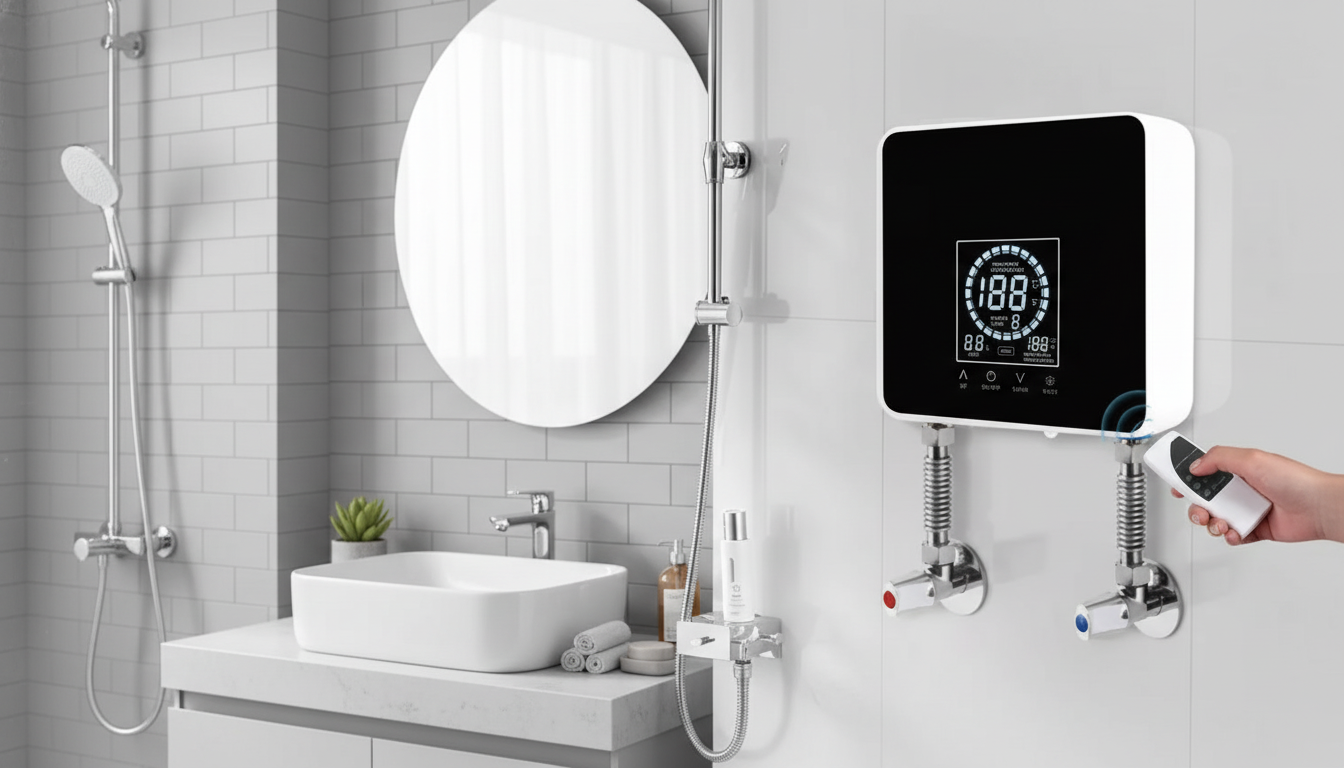
110V/220V Wall-Mounted Instant Electric Water Heater with LCD & Remote: Fast Hot Water Without the Tank
A wall-mounted instant electric water heater is built to heat water on demand—no storage tank required. That means less wasted space, less standby heat loss, and quicker access to warm water right where you need it. This 110V/220V model adds an LCD display for clear temperature/status visibility plus a remote control for convenient adjustments when the unit is mounted high or tucked into a utility area. As with any on-demand electric heater, the best results come from matching the unit to the intended fixture and confirming electrical requirements before installation.
What this heater is designed to do
Traditional tank heaters keep dozens of gallons hot all day. An instant electric model works differently: it heats only when a faucet opens, which can be ideal for point-of-use applications or as a supplemental boost where a distant tank leaves you waiting.
- Provides hot water on demand rather than storing heated water in a tank
- Wall-mounted form factor to keep floors and cabinets clear
- LCD readout for at-a-glance temperature/status checks
- Remote control support for adjusting settings without reaching the unit
- Useful for point-of-use applications or supplemental hot water where a tank heater struggles
Key features that matter day to day
On-demand heaters are often chosen for convenience, but the “small” usability details are what you’ll notice daily—especially in guest baths, rentals, and utility spaces.
- LCD interface: simplifies temperature monitoring and reduces guesswork during use
- Remote control: handy when the unit is mounted higher on the wall or installed in tight utility zones
- Instant heating approach: can reduce waiting compared with long pipe runs from a distant tank
- Compact wall installation: fits apartments, small bathrooms, guest suites, cabins, or service areas
- Dual-voltage listing (110V/220V): confirm supported wiring options in the product specs and match the home’s circuit capacity
| Feature | Practical benefit | Where it helps most |
|---|---|---|
| LCD display | Quick visibility of temperature and status | Busy bathrooms, guest use, rental units |
| Remote control | Adjust settings without touching the unit | High wall placement, utility rooms |
| Wall-mounted design | Saves floor/cabinet space | Small homes, tight vanities, closets |
| On-demand heating | No tank standby losses; hot water as needed | Light-to-moderate draw locations |
| Voltage flexibility (110V/220V) | Potential fit for different electrical setups | Renovations and retrofits (after electrician review) |
Best places to install it
Instant electric heaters shine when they’re close to the fixture they serve. Shorter pipe runs typically mean less time waiting for hot water and less wasted water down the drain.
- Single-bath or half-bath setups that need faster hot water delivery at the sink
- Guest bathrooms or additions where extending a main hot-water line is costly
- Cabins, workshops, salons, or utility sinks with intermittent use
- Supplemental hot water near a fixture when the primary heater is far away
- Avoid placing it where freezing temperatures are common unless the space is conditioned and protected
Electrical planning (what to confirm before buying)
Performance and safety both depend on the electrical plan. Dual-voltage capability can be convenient, but it doesn’t remove the need for correct circuit sizing, protection, and code compliance.
- Verify whether the intended installation will use 110V or 220V and what performance is expected at that voltage
- Check the required breaker size, wire gauge, and whether a dedicated circuit is needed (often recommended for higher-power instant heaters)
- Confirm local code requirements, grounding, and GFCI/RCD protection where applicable (especially in wet areas)
- Ensure the service panel has capacity for the additional load if installed as a new circuit
- Use a qualified electrician if any part of the circuit sizing or code compliance is uncertain
| Item to confirm | Why it matters | How to verify |
|---|---|---|
| Voltage and circuit type | Matches heater requirements and prevents nuisance trips | Review listing specs and panel labeling; consult electrician |
| Breaker and wire sizing | Avoids overheating and improves reliability | Compare to code guidance; electrician load calc |
| Mounting location | Reduces strain on plumbing and improves access | Measure clearance; check studs/anchors |
| Water line compatibility | Ensures leak-free connections and serviceability | Identify pipe size/material; plan shutoff valves |
| Moisture protection | Safety in bathrooms/utility zones | Confirm placement and required protective devices |
Installation and setup considerations
Comfort, temperature control, and realistic expectations
For scald prevention basics and household temperature safety, see guidance from the U.S. Consumer Product Safety Commission.
Safety and maintenance basics
For broader energy and water-heating fundamentals, the U.S. Department of Energy offers practical background. For electrical code references used by many jurisdictions, consult NFPA’s National Electrical Code (NEC) information.
In-stock options to complete the upgrade
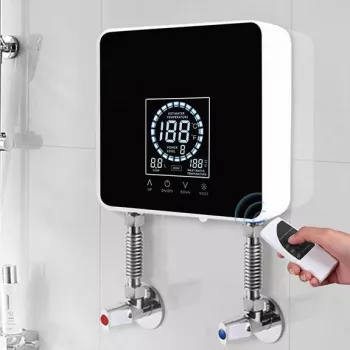
- 110V/220V Wall-Mounted Instant Electric Water Heater with LCD & Remote ($315.51)
- Smart Toilet with Auto Open and Flush, Heated Seat, Bidet, and Intelligent Features ($1590.49)
- Minimalist Acrylic Side Table ($523.17)
FAQ
Is a 110V or 220V connection better for an instant electric water heater?
220V setups typically support higher heating capacity and a stronger temperature rise at usable flow rates. The right choice depends on the heater’s specifications, your home’s available circuit capacity, and local code requirements.
Can it be installed in a bathroom?
It can be suitable when installed according to local electrical and plumbing codes with proper clearances, moisture protection, and required safety devices such as GFCI/RCD where applicable. Placement should keep wiring and controls away from direct spray and maintain service access.
Why does the water temperature change when the faucet flow changes?
Instant heaters balance heating power against flow rate, so increasing flow can reduce the temperature rise while reducing flow can increase it. Seasonal incoming water temperature and scale buildup inside the heater can also affect stability.













Leave a comment