Reversible Cast Iron Griddle: Sear, Grill & Serve
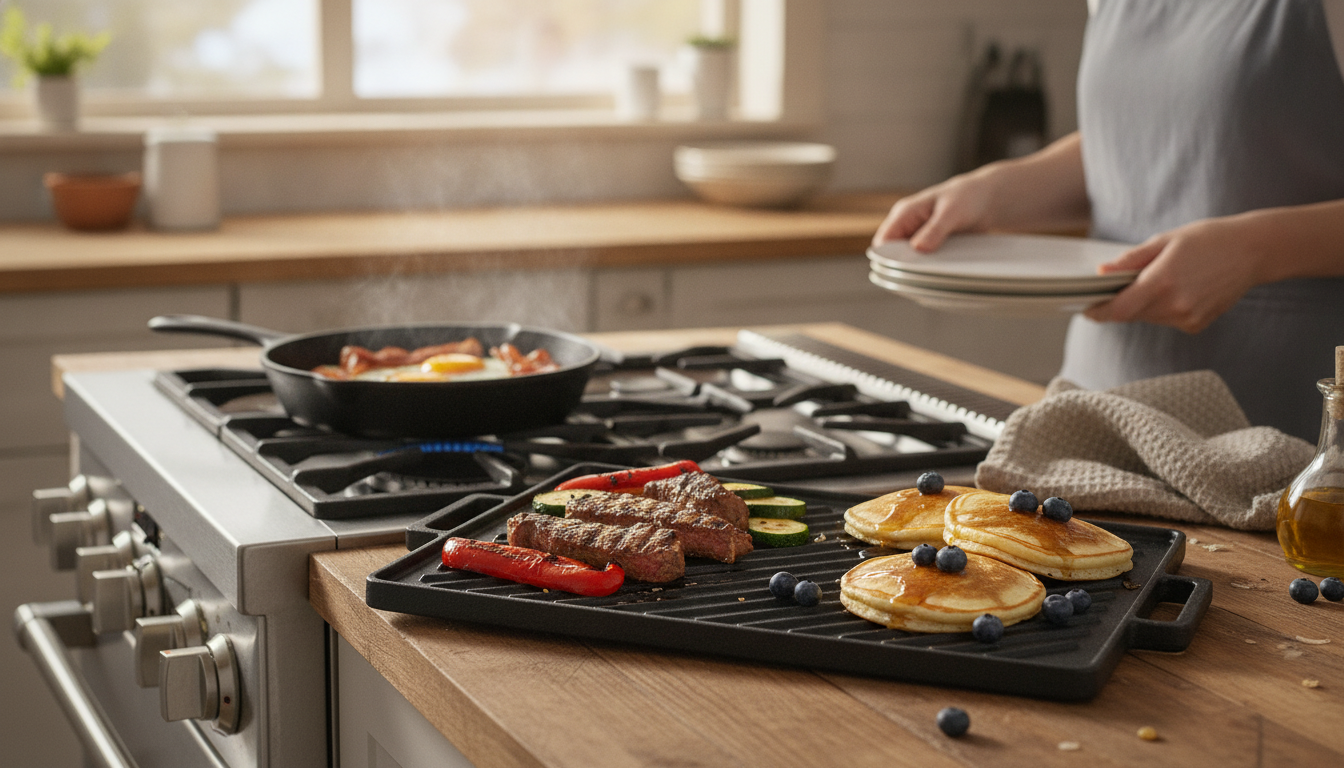
Reversible Pre-Seasoned Cast Iron Griddle Pan with Handles: Everyday Searing, Sizzling, and Serving
A reversible cast iron griddle pan can replace multiple pieces of cookware: one side for smooth griddling and one side for grill-style searing. Pre-seasoning helps reduce sticking from the start, while integrated handles make it easier to move from stovetop to oven to table. This guide covers how to use it well, what to cook, heat control tips, cleaning and care, and how to keep the seasoning performing over time.
Why a Reversible Cast Iron Griddle Earns Its Counter Space
A reversible griddle is essentially two pans in one. Flip it depending on what you’re cooking and how you want it to finish.
- Two cooking surfaces in one pan: a flat side for pancakes, tortillas, eggs, and sandwiches; a ridged side for burgers, steaks, chicken, and vegetables with grill marks
- Excellent heat retention for consistent browning and a strong sear, especially when fully preheated
- Pre-seasoned finish provides a head start on nonstick performance and helps protect the iron from moisture
- Built-in handles improve control when repositioning on burners or sliding into the oven
- Cast iron can go from stovetop to oven and can also be used on many grills (check fit and clearance first)
If you’re shopping for a versatile option designed for both sides of the menu—breakfast through dinner—take a look at the Reversible Pre-Seasoned Cast Iron Griddle Pan with Handles.
What “Pre-Seasoned” Means and How to Improve It Fast
Pre-seasoned cast iron typically arrives with a baked-on oil layer that helps reduce rust risk and improves food release. It’s a great starting point, but the first few meals are what turn that base layer into a slicker, darker, more durable cooking surface.
- Pre-seasoned typically means the iron is coated with a baked-on layer of oil that reduces rust risk and helps food release
- First uses matter: cook higher-fat foods (bacon, burgers, grilled cheese) to strengthen the seasoning naturally
- If food sticks early on, add a thin film of oil and heat the pan until it just begins to smoke, then cool—repeat as needed
- Avoid long simmering of acidic foods (tomatoes, vinegar-heavy sauces) during the first few uses to prevent dulling the finish
- Store completely dry; a light wipe of oil after cleaning helps maintain the protective layer
For a deeper dive into seasoning technique and why thin oil layers matter, this walkthrough from Serious Eats is a solid reference.
Heat Control: The Difference Between “Hot” and “Ready”
Cast iron rewards patience. Because it retains heat so well, the goal is even preheat—then steady cooking—rather than blasting the burner and hoping for the best.
- Preheat gradually: start on low to medium for 3–5 minutes, then increase as needed; rushing to high heat can cause uneven hotspots
- Use the water-drop test: a few drops should dance and evaporate quickly when the surface is ready
- For griddle cooking (pancakes, eggs), medium to medium-low often performs better than high heat
- For searing on the ridged side, allow a longer preheat, then sear in batches to prevent temperature collapse
- Oven finishing: after searing thick cuts, transfer to a 375–450°F oven to finish evenly without burning the exterior
When cooking meat, finish with safe internal temperatures. The USDA safe temperature chart is the most reliable quick check.
Best Foods for Each Side (and What to Avoid)
Think of the flat side as a diner griddle and the ridged side as a grill pan. Both can brown beautifully, but they excel at different jobs.
Quick guide to choosing the right side and heat level
| Cooking task | Best side | Heat range | Practical tip |
|---|---|---|---|
| Pancakes and French toast | Flat | Medium-low to medium | Preheat fully, then lower slightly before pouring batter for even browning |
| Smash burgers | Flat | Medium-high | Press once; let a crust form before scraping with a sturdy spatula |
| Steak or chops | Ridged | Medium-high to high | Pat dry, oil the meat (not the pan) for better contact and less smoke |
| Chicken thighs | Ridged | Medium-high | Sear skin-side first, then finish in the oven for crispness without burning |
| Vegetables (zucchini, asparagus) | Ridged | Medium | Toss with oil and salt; cook in a single layer for better marks |
| Reheating tortillas and buns | Flat | Medium-low | Warm briefly; cover loosely with a towel to keep soft |
Cleaning and Care That Preserve Seasoning
For a straightforward, practical care overview, the National Park Service cast iron care guide offers helpful, field-tested basics.
Handling, Storage, and Cooktop Compatibility
If you like serving family-style, consider setting up a dedicated landing spot near the kitchen—an easy-to-clean surface like the Minimalist Acrylic Side Table can work as a compact staging area for hot pans (always use a trivet or heat-safe pad).
Simple Meal Ideas for Weeknights and Weekends
FAQ
Can a cast iron griddle pan go in the oven?
Yes in most cases; confirm any handle material is oven-safe. Preheat gradually, use mitts, and avoid thermal shock (for example, never run cold water over a hot pan).
How do you keep food from sticking on a pre-seasoned cast iron griddle?
Preheat fully, use enough fat, and start with medium heat. Build seasoning by cooking higher-fat foods early on, and don’t move food too soon—release improves once a crust forms.
Is it okay to wash cast iron with soap?
A small amount of mild soap is fine for routine cleaning. Avoid soaking and dishwasher cycles, then dry thoroughly and wipe on a very thin layer of oil to protect the surface.














Leave a comment