9 GPM 180,000 BTU Indoor LP Tankless Heater Guide
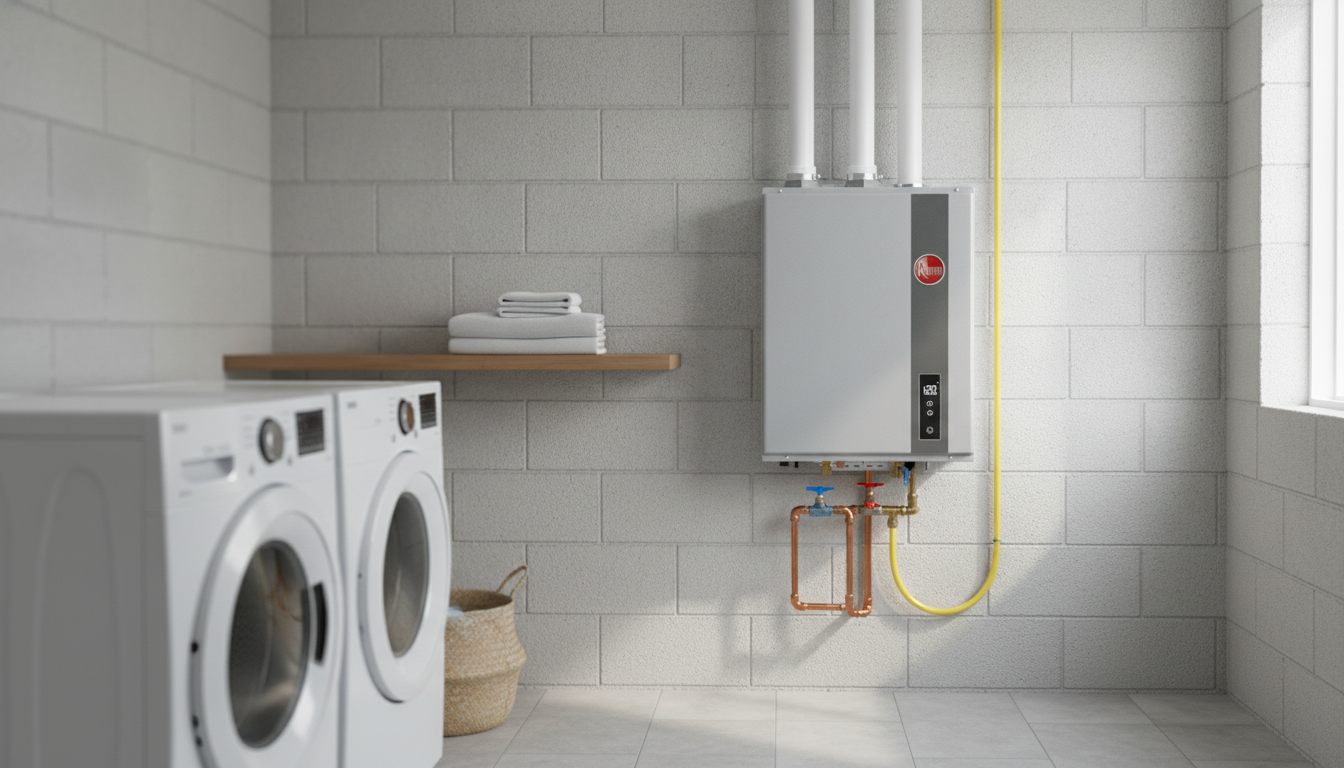
9 GPM 180,000 BTU Indoor Liquid Propane Tankless Water Heater: What to Expect at Home
A high-output indoor propane tankless water heater can deliver steady hot water for multiple fixtures while saving space compared with a storage tank. This guide breaks down what 9 GPM and 180,000 BTU mean in real use, what’s needed for safe indoor installation, and how to estimate performance for showers, sinks, and appliances.
What this heater is built to do
A 9 GPM, 180,000 BTU indoor LP tankless unit is designed for households that want consistent hot water during back-to-back showers or overlapping fixture use—without dedicating floor space to a large storage tank.
- Delivers hot water on demand for homes that want consecutive showers or simultaneous fixture use.
- Indoor installation focus: correct venting, a sound combustion-air plan, and properly sized gas supply are essential.
- Propane-ready (liquid propane): a practical option for rural homes or properties without natural gas service.
- Output class: 180,000 BTU is commonly chosen when higher flows are expected or incoming water is colder.
Understanding GPM vs BTU (and why both matter)
Tankless ratings can be confusing because flow and heating power work together. GPM (gallons per minute) is the amount of water the heater can warm to a target temperature rise; it is not a single guaranteed number year-round. BTU is the heater’s maximum heat output—more BTU generally means the unit can maintain a bigger temperature rise at a higher flow.
- GPM depends on the required temperature rise (for example, warming 50°F groundwater up to 120°F requires a 70°F rise).
- BTU is the “engine size” that determines how much heating the unit can apply at peak demand.
- Cold-climate reality: winter incoming water temperatures can reduce achievable hot-water flow at the same setpoint.
- A practical sizing method is to estimate incoming water temperature, select an outlet setpoint, then compare expected simultaneous fixture demand.
Example hot-water demand by fixture (typical ranges)
| Fixture | Typical hot-water flow contribution | Notes |
|---|---|---|
| Shower (standard) | 1.0–2.0 GPM | Flow depends on showerhead rating and mixing with cold water |
| Bathroom sink | 0.3–0.7 GPM | Often intermittent; lower sustained demand |
| Kitchen sink | 0.5–1.5 GPM | Higher during filling and dishwashing |
| Dishwasher | 0.5–1.0 GPM (average) | Draws in cycles; may require hot inlet temperature |
| Clothes washer | 0.5–1.5 GPM (average) | Varies by cycle and machine type |
Where 9 GPM capacity fits in a home
A 9 GPM “class” tankless heater is typically chosen for multi-fixture comfort. In many homes (especially where incoming water is moderate), it can support combinations like two showers plus a sink, or a shower while the dishwasher runs. The key detail is that the real maximum flow changes with temperature rise.
- Simultaneous-use examples: two showers plus a bathroom sink; one shower plus laundry; shower plus dishwasher.
- Seasonal variation matters: colder winter water means more heating work and less deliverable flow.
- Comfort improves when setpoints are reasonable (many households run around 120°F, subject to local code and safety requirements).
- Water-saving fixtures often “feel” like a heater upgrade because they reduce the total GPM required at peak times.
For background on how demand-type systems behave and why they can reduce standby losses compared with tanks, see the U.S. Department of Energy overview: Tankless or Demand-Type Water Heaters.
Indoor installation essentials (venting, combustion air, clearances)
Indoor tankless units are not “hang and go” appliances. The most important planning steps are venting, combustion air, and safe service clearances.
For broader fuel-gas safety and code context, reference NFPA 54 (National Fuel Gas Code): NFPA 54, and propane appliance safety guidance from PERC: Propane Safety.
Propane supply planning (tank size, regulator, and gas line sizing)
Quick estimate: propane use at full fire (rule-of-thumb)
| Input | Approximate result | What it means |
|---|---|---|
| 180,000 BTU/h load | ~2.0 gallons of propane per hour (at continuous full output) | Real usage is often lower because tankless heaters modulate |
| 20 lb cylinder propane content | ~4.6 gallons | At continuous full output, run time is roughly a couple of hours (often longer in typical mixed use) |
Performance expectations and comfort tips
Product picks available now
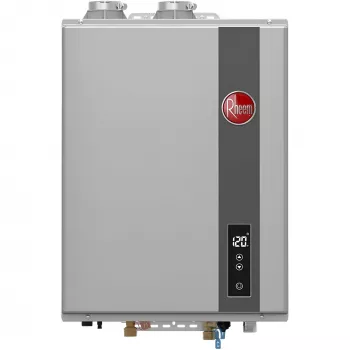
- 9 GPM 180,000 BTU Indoor Liquid Propane Tankless Water Heater — high-output indoor LP tankless option aimed at multi-fixture hot water demand.
- Smart Toilet with Auto Open and Flush, Heated Seat, Bidet, and Intelligent Features — a bathroom upgrade that pairs well with consistent hot-water performance for bidet and wash features.
Product overview: 9 GPM 180,000 BTU Indoor Liquid Propane Tankless Water Heater
| Item | Value |
|---|---|
| Model | 9 GPM 180,000 BTU Indoor Liquid Propane Tankless Water Heater |
| Fuel type | Liquid Propane (LP) |
| Max input | 180,000 BTU |
| Advertised flow class | 9 GPM (depends on temperature rise) |
| Availability | In stock |
| Price | $1280.65 USD |
FAQ
How long will a 20lb propane tank run a tankless water heater?
A 20 lb propane cylinder holds about 4.6 gallons of propane, and a 180,000 BTU tankless heater can use roughly 2 gallons per hour if it ran continuously at full fire. In typical household use, run time is usually longer because the heater modulates and doesn’t stay at maximum output nonstop.
What is the difference between BTU and GPM for tankless water heaters?
BTU is the heater’s maximum heating power, while GPM is the amount of water it can heat to a chosen temperature rise. Higher BTU generally supports higher GPM at the same temperature rise, but colder incoming water increases the required rise and lowers the achievable flow.













Leave a comment