Anxiety Relief Bundle: Mindfulness, Prompts & Checklist
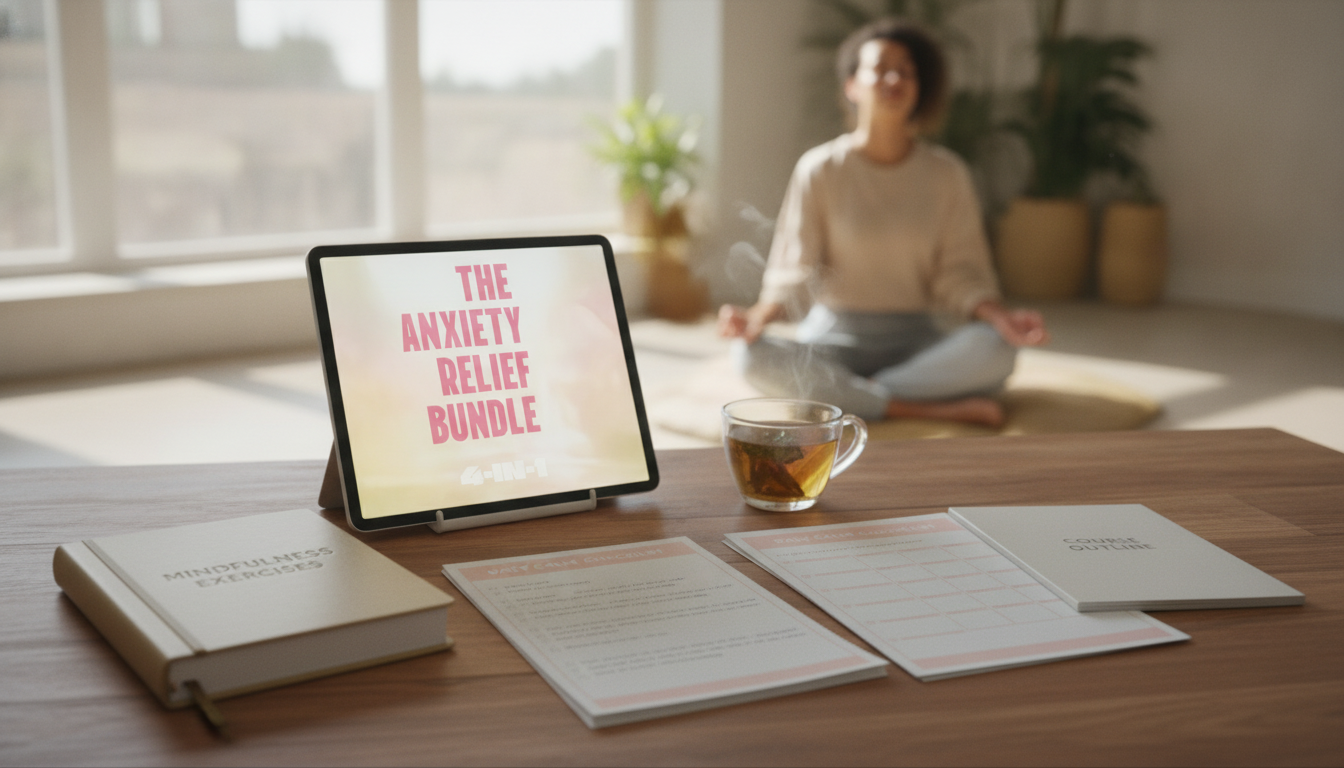
The Anxiety Relief Bundle: A Path to Calm
Anxiety can show up as racing thoughts, physical tension, and a constant sense of urgency. The Anxiety Relief Bundle: A Path to Calm brings together four practical tools—mindfulness exercises, positive-thinking prompts, a printable checklist, and a course-style outline—designed to help create steadier routines and calmer moments, especially when stress feels repetitive or overwhelming.
These tools are meant to be used in real life: between meetings, after a tough conversation, or during the time of day when worry tends to spike. If you’re also building a calmer physical space, a simple “reset spot” can help—like a clutter-free corner with a small surface such as the Minimalist Acrylic Side Table to hold your checklist, journal, or a glass of water.
For background on anxiety symptoms and care options, you can also reference the National Institute of Mental Health (NIMH) overview of anxiety disorders.
What’s Inside the 4-in-1 Bundle
- Mindfulness exercises to anchor attention and reduce spiraling thoughts
- Positive thinking prompts to reframe unhelpful patterns without forcing unrealistic optimism
- Printable checklist for simple, repeatable daily support steps
- Course outline that organizes the tools into an easy sequence for consistent practice
- Flexible use: follow the outline step-by-step or pick a tool that fits the day
The strength of a bundle like this is that it reduces the “What should I do right now?” problem. When anxiety is loud, decision fatigue is real. Having a small set of repeatable options can make it easier to take the next workable step.
How Mindfulness Exercises Support Calm
Mindfulness isn’t about clearing your mind or trying to “think positive” your way out of stress. It’s the practice of noticing what’s happening—thoughts, body sensations, emotions—without immediately reacting as if each thought is an emergency.
- Short practices that emphasize noticing thoughts and sensations without immediately reacting
- Breath and body-based grounding to reduce physical arousal (tight chest, clenched jaw, restless energy)
- Simple “name and notice” techniques to interrupt worry loops
- Ways to adapt practice length: 2 minutes (reset), 5–10 minutes (daily baseline), 15 minutes (deeper unwind)
- Suggestion to pair mindfulness with a consistent cue (morning coffee, lunch break, after-work transition)
If mindfulness feels slippery at first, that’s normal. The goal is consistency over intensity: a short, repeatable reset can be more useful than an occasional long session. For more on how mindfulness is commonly defined and used, see the American Psychological Association (APA) mindfulness resource.
Positive Thinking That Feels Realistic
“Positive thinking” works best when it’s grounded. Instead of forcing optimism, the prompts in the bundle support balanced reframes—statements that validate discomfort while opening a more workable next step.
- Prompts that help challenge catastrophic predictions and all-or-nothing thinking
- Balanced reframes that validate discomfort while opening a more workable next step
- Guided reflection: separating facts, interpretations, and possibilities
- Micro-statements for stressful moments (brief, believable, repeatable)
- Journaling options for low-energy days: one sentence, a checklist, or quick “evidence for/evidence against” notes
When stress is high, it can help to keep reframes small. Think: “This is uncomfortable, and I can take one step,” instead of “Everything is great.” The point is to reduce the intensity of the spiral long enough to choose a helpful action.
Printable Checklist for Daily Stability
A checklist turns vague advice into something you can actually do. It also acts like a visual reminder that you have options—even if your mind is stuck on repeat.
Example Daily Calm Checklist (Printable-Style)
| Time of Day | Action | Why It Helps | Check |
|---|---|---|---|
| Morning | 60-second grounding + set one priority | Starts the day with control and focus | ☐ |
| Midday | Short walk or stretch (5–10 minutes) | Releases tension and resets attention | ☐ |
| Afternoon | Reframe one anxious thought using a prompt | Reduces spirals and improves coping | ☐ |
| Evening | Screen-down wind-down + calming breath | Supports sleep and nervous system recovery | ☐ |
Using the Course Outline to Build Momentum
Who This Bundle Can Help Most
If anxiety is severe, worsening, or interfering with daily life, professional support can be an important part of care. The Mayo Clinic overview of anxiety disorders includes helpful context on symptoms and treatment options.
Simple Setup for a Calmer Week
Consider pairing your routine with a dedicated surface that stays clear for your tools—some people like a living-room reset area around a simple table such as the Modern Gold Stainless Steel Coffee Table or a small side table near where they naturally pause during the day.
Shop Tools Mentioned
- The Anxiety Relief Bundle: A Path to Calm | 4-in-1 Bundle | Mindfulness Exercises, Positive Thinking, Printable Checklist & Course Outline
- Minimalist Acrylic Side Table
- Modern Gold Stainless Steel Coffee Table
FAQ
How quickly can mindfulness and reframing exercises make a difference?
Some people notice short-term relief right after a grounding exercise, especially when it reduces physical tension. Longer-lasting change usually comes from consistent practice over days to weeks, and the timeline varies based on stress level, sleep, and daily demands.
Is this bundle a replacement for therapy or medication?
No. It’s a self-guided support tool, not medical treatment, and it can be used alongside professional care. If anxiety is severe, persistent, or worsening—or if you feel unsafe—seek help from a qualified clinician or local emergency resources.
How should the printable checklist be used without feeling overwhelming?
Start with a minimum baseline (even 2–3 items) and treat missed days as useful information, not failure. Adjust the checklist to match your schedule and energy so it stays supportive instead of becoming another source of pressure.















Leave a comment