Soft Serve Machine Problems: Runny Mix, Leaks, Errors
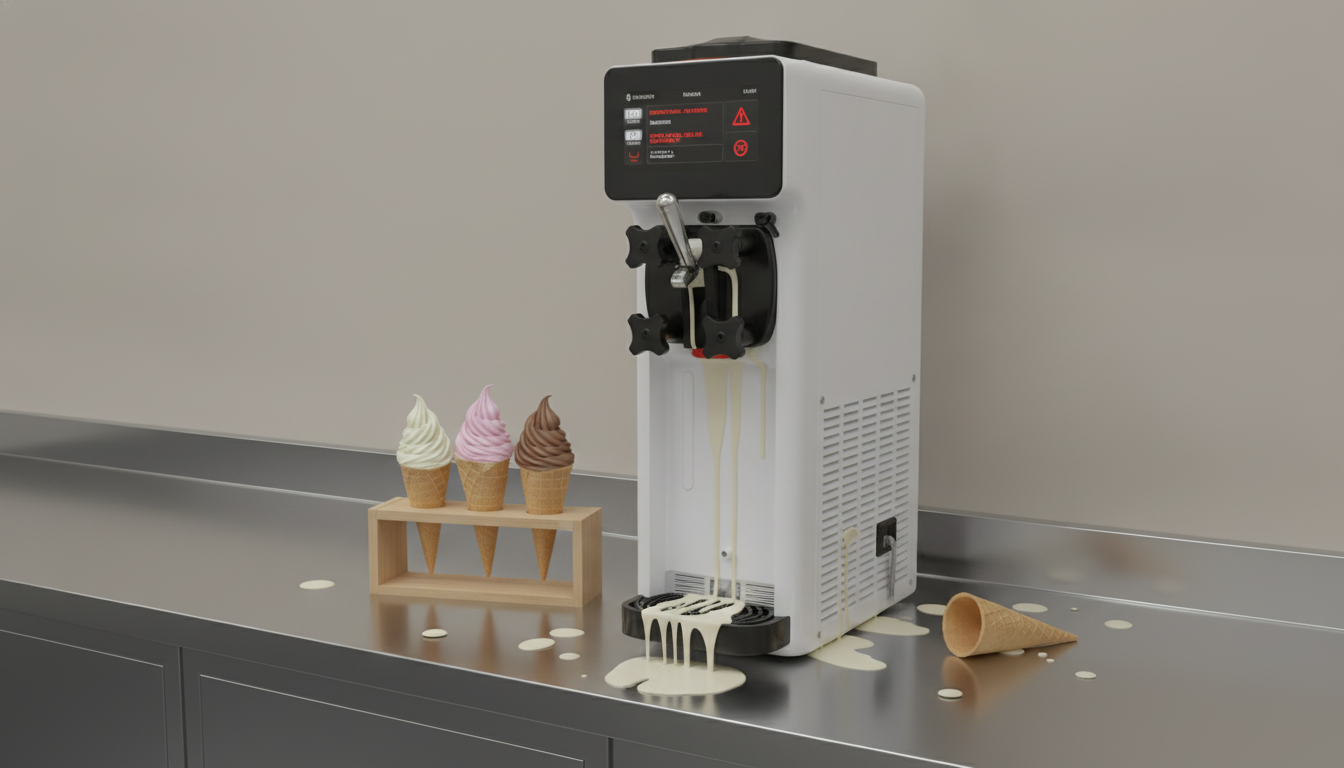
What are common problems with soft serve machines?
Soft serve machines are built to deliver consistent, creamy servings on demand, but a few recurring issues can interrupt service. The most common problems fall into four buckets: product consistency, temperature control, air incorporation (overrun), and cleaning or mechanical wear. Spotting the cause quickly helps prevent wasted mix, long downtime, and surprise maintenance costs.
1) Soft serve comes out too runny or too hard
Inconsistent texture usually points to temperature or mix issues. If product is runny, the barrel may not be cold enough, the mix may be too warm going in, or the machine may not have had enough time to pre-chill. If it’s too hard, settings may be too aggressive or the unit may be over-freezing, which can strain the drive system and reduce smoothness.
2) Weak flow, slow draw, or “no dispense”
Poor dispensing is often caused by partial clogs (dried mix in the spout), low mix level, an air leak, or worn seals that reduce pressure. Some countertop units also require correct hopper-to-freezing cycle timing; dispensing before the machine reaches target consistency can feel like a “no-flow” problem.
3) Excessive dripping or leaking
Leaks commonly come from worn O-rings, mis-seated gaskets, or incorrect reassembly after cleaning. Drips at the spout can also happen when product is too warm or when the draw valve isn’t sealing fully due to residue buildup.
4) Error codes, overheating, or loud operation
Machines may throw errors when airflow is blocked, the condenser is dirty, or internal sensors detect abnormal temperatures. Overheating often relates to poor ventilation around the unit—especially important for countertop models. Grinding, squealing, or intermittent churning can indicate a worn belt, stressed motor, or product that has become too thick for the current settings.
5) Cleaning and sanitation problems
Most “mystery” issues trace back to cleaning: residue in the freezing cylinder, sticky valves, or biofilm in hard-to-reach channels. Strict cleaning intervals and correct reassembly prevent off-flavors, contamination risk, and premature part wear.
For a deeper look at features, operation, and practical upkeep tips for countertop models, see this guide to a touch-screen single-flavor countertop soft serve maker.
FAQ
How often should you clean a soft serve machine?
Follow the manufacturer’s schedule, but many setups require frequent cleaning of food-contact parts and regular sanitizing to prevent buildup and bacteria. If output quality drops or parts feel sticky, clean sooner rather than later.














Leave a comment