Touch-Screen Single-Flavor Countertop Soft Serve Maker
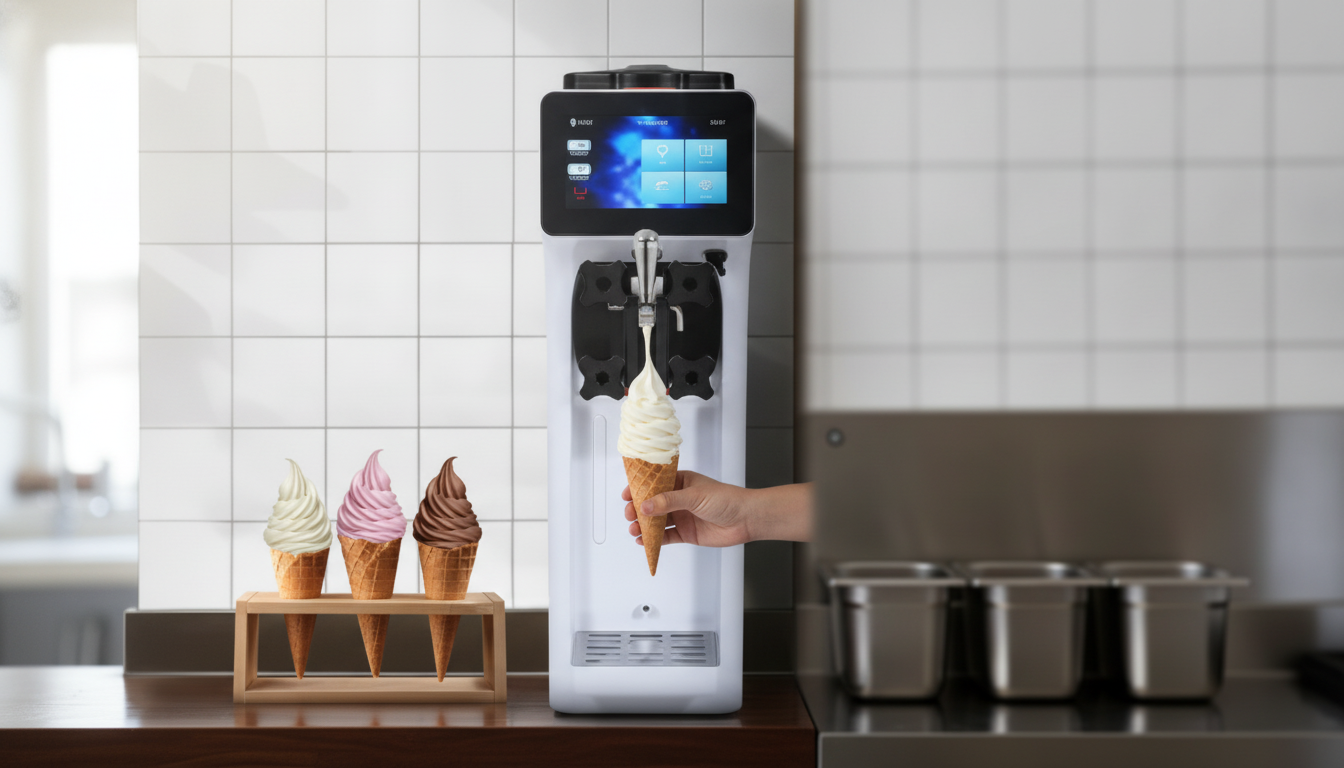
Single-Flavor Countertop Soft Serve Ice Cream Maker with Touch Screen
A countertop soft serve machine with a touch screen streamlines serving frozen treats in a compact footprint. A single-flavor setup keeps the workflow simple while still delivering the airy, smooth texture people expect from soft serve. Below is what to expect day to day, where a single-flavor unit fits best, what to verify before ordering, and how to maintain consistently creamy results.
Who a single-flavor countertop machine is best for
Single-flavor machines shine when speed and repeatability matter more than offering multiple mixes at once. They’re a strong fit for:
- Home entertaining: Serve party desserts quickly without juggling multiple hoppers or complicated programs.
- Small service setups: Offices, salons, studios, and pop-ups can offer one dependable “signature” flavor with minimal training.
- Limited space counters: Single-flavor designs often reduce footprint and complexity versus multi-flavor units.
- Operators who value simplicity: Fewer variables to manage while still getting consistent overrun and texture.
What the touch screen changes in day-to-day use
Touch screen control is less about novelty and more about making routine operation predictable:
- Faster setup: Guided menus can reduce guesswork for firmness, cooling, and dispensing modes.
- Clear status at a glance: Digital readouts make it easier to confirm temperature and operating states than analog dials.
- Consistency: Repeating the same program helps keep texture stable from batch to batch, especially for a single “house flavor.”
- Basic troubleshooting cues: Alerts can highlight issues like over-soft product, cooling strain, or mode changes you didn’t intend.
Key specs to evaluate before ordering
Before committing to a countertop soft serve unit, double-check the practical details that affect installation, recovery time, and maintenance:
- Countertop dimensions and weight: Confirm the machine fits with clearance for ventilation and room to access parts during daily cleaning.
- Electrical requirements: Verify the outlet type and circuit capacity so the unit doesn’t trip breakers during compressor cycles.
- Cooling performance: Look for stable freezing that can maintain serving temperature during continuous dispensing, not just a single pull.
- Hopper/cylinder capacity: Match capacity to expected servings to reduce refills and avoid long recovery between rushes.
- Noise and heat output: Especially important for open kitchens, front counters, and small rooms.
- Materials and food-contact parts: Prioritize easy-to-sanitize components and durable seals that tolerate frequent disassembly.
- Included accessories and spares: Extra O-rings, gaskets, and a brush set can prevent downtime.
Single-flavor serving ideas that feel like a menu
One base flavor doesn’t have to feel repetitive. Variety comes from presentation and add-ins that don’t change your core workflow:
- Change the experience with toppings: Sauces, cereal crunch, cookie crumbles, fruit, or nuts can create multiple “menu items” from one base.
- Use swirls without changing mix: Add ribbons on dispense (caramel, chocolate, berry) while keeping one base in the machine.
- Seasonal specials: Rotate the base mix monthly (vanilla, chocolate, strawberry, matcha) while keeping settings and cleaning routine the same.
- Offer two formats: Cups support portion control; cones speed service and reduce dishwashing.
- Pairings: Build simple upsells like an affogato, a root beer float, or sundae kits for events.
Setup and first run checklist
A smooth first run is mostly about temperature discipline, airflow, and correct assembly:
- Placement: Leave space around vents and keep the unit away from direct sunlight or heat-producing appliances.
- Pre-chill: Let the machine reach operating temperature before expecting ideal firmness and a clean curl.
- Mix prep: Follow mix instructions precisely. Mix that’s too thin can go watery; too thick can strain the system and slow recovery.
- Sanitation: Wash and sanitize food-contact parts before first use and after each service day, especially when working with dairy.
- Test dispense: Pull a small amount first, then adjust settings gradually rather than making big jumps.
For general food safety guidance, refer to the FDA Food Code and USDA recommendations on refrigeration and food safety.
Cleaning and maintenance that prevents the most common issues
Soft serve quality drops quickly when residue builds up or seals start leaking air. A simple routine prevents most complaints:
Quick reference: common symptoms and likely causes
| Symptom | Likely cause | Quick check |
|---|---|---|
| Runny soft serve | Not cold enough / warm mix | Pre-chill longer; confirm vents are clear; chill mix before filling |
| Grainy texture | Temperature fluctuation / mix issues | Use recommended mix ratio; avoid repeated thaw/refreeze; verify steady operating temp |
| Slow to freeze between servings | High ambient heat / low airflow | Increase clearance around vents; reduce consecutive draws; let unit recover |
| Leaking at dispense | Seal wear / improper assembly | Inspect and replace O-rings; reassemble carefully; clean residue from valve area |
| Handle sticks or dispenses unevenly | Residue buildup / dry parts | Deep clean valve parts; apply food-grade lubricant where specified |
Product snapshot: what to expect from this countertop unit
In-stock picks to build your setup
- Single Flavor Countertop Soft Serve Ice Cream Maker with Touch Screen
- Minimalist Acrylic Side Table (a clean, easy-wipe landing spot for cones, toppings, and cup stacks)
- Modern Gold Stainless Steel Coffee Table (for events where you want a dedicated self-serve sundae station)
FAQ
What is the best soft serve ice cream maker for home use?
The best option depends on your batch size, available countertop space, electrical compatibility, and how quickly you can disassemble and clean it. For many homes, a compact single-flavor countertop machine with simple controls and accessible washable parts is the most practical balance.
What are common problems with soft serve machines?
Most problems come down to temperature management, airflow, mix consistency, and cleaning. Runny product, grainy texture, leaks, and slow recovery are often improved by chilling the mix, keeping vents clear, replacing worn seals, and maintaining a consistent sanitation routine.














Leave a comment