Sharp Peeler Safety: Stop Finger Cuts While Peeling
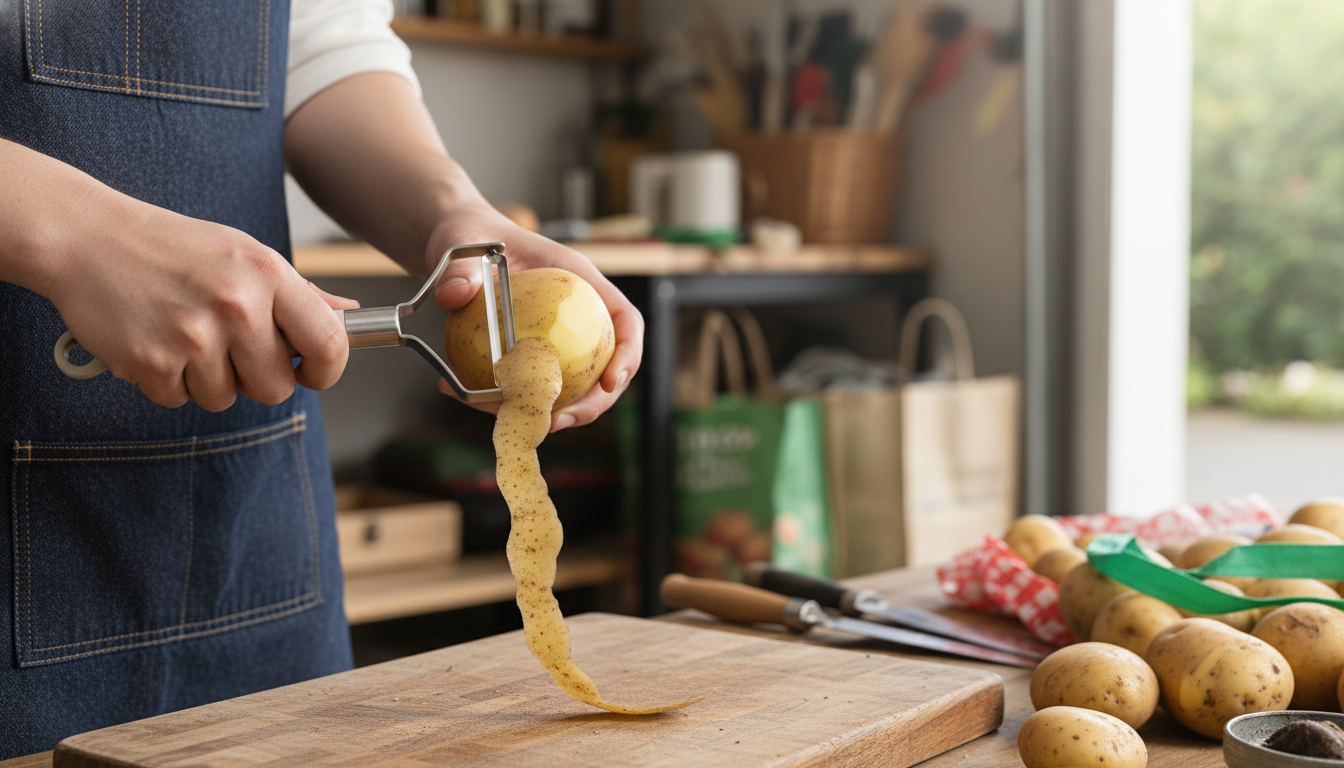
How do I safely use a sharp manual peeler to avoid cutting my fingers?
A sharp manual peeler is faster and safer than a dull one—if your hands, posture, and grip are set up correctly. Most nicks happen when the food slips, the peeler travels past the end of the vegetable, or fingers drift into the blade’s path. Use these habits to keep control from start to finish.
Start with a stable setup
Dry your hands and the produce first; moisture makes both slip. Work on a steady cutting board or a folded towel to prevent sliding. Good lighting helps you see where the blade is headed, especially near ends and curves.
Grip the food to keep fingertips out of the lane
Hold the vegetable with a “claw” grip: tuck fingertips slightly back and let your knuckles guide the motion. For round items (potatoes, apples), consider slicing a thin “flat” on one side first so it sits securely. When peeling long items like carrots or cucumbers, keep the far end planted on the board or hold it low so the peeler doesn’t fly past the tip.
Use short strokes and peel away from your hand
Short, controlled strokes reduce momentum and make it easier to stop before the blade reaches your fingers. Whenever possible, peel away from the hand holding the produce rather than toward it. If your peeler design encourages a toward-you motion, slow down near the ends and stop before the blade clears the produce.
Let the blade do the work—don’t force it
Pressing hard increases the chance of a skid. With a sharp peeler, use light pressure and steady speed. If the skin won’t lift easily, rotate the produce and approach the area from a different angle instead of muscling through.
Use simple safety helpers
A cut-resistant glove on the hand holding the produce adds a strong layer of protection. A fork can also hold small or slippery pieces (like a short potato) while you peel. If the item is too small to hold safely, trim and save it for another prep method instead of chasing it with the blade.
For more detailed tips and handling techniques, visit the full guide on safely using a sharp manual peeler.
FAQ
Should I use a cut-resistant glove when peeling?
Yes—wearing a cut-resistant glove on the hand that holds the food can significantly reduce injury risk if the peeler slips. It’s especially helpful for small, round, or slick produce.
















Leave a comment